The road wandered on Until harbor, garden, sword Became one journey
This trip was supposed to be several separate things.
A promise.
A city.
A garden.
A seminar.
A ferry ride.
A hotel on a lake.
A flight home.
Instead, somewhere along the way, they all became the same story.
The trip began with a promise.
More than a decade ago, H and I spent our tenth anniversary in Vancouver. Like many couples celebrating on a budget, we spent a certain amount of time looking at things we couldn’t quite justify.
The Pan Pacific Club Floor.
The Michelin-starred restaurants.
The little luxuries that belonged in the category of “someday.”
This year, someday arrived.
Five Sails and Botanist were extraordinary, but not simply because of the food.
What I remember most is the kindness.
A place set at the table.
A cremarble quietly present.
A staff that somehow understood that an anniversary dinner for one was still an anniversary dinner.
A promise that had waited patiently for years.
And was finally kept.
From there, the trip began to wander.
Or perhaps I did.
Vancouver slowly transformed from a city I was navigating into a city I understood.
The map and the town finally agreed.
The harbor stopped feeling like a destination and started feeling familiar.
Even the ping-pong tables somehow became part of the story.
Nitobe Memorial Garden reminded me that some places feel familiar because they are introducing us to something we already love.
The tea house.
The lanterns.
The moss.
The realization that the Urasenke tradition I had studied at Green Gulch connected me to a place I had never visited before.
Not through memory.
Through recognition.
Then there was the callback to the Ripplecove Inn from our honeymoon.
Relax, then proceed. The mountain gaze sees all things. Nene has new clothes.
Four hours before practice on Friday evening, I found myself sitting in the lounge at the Inn on Long Lake in exactly the mental state that seems to precede every seminar.
Not fear.
Not nerves.
More a mild conviction that everyone else had somehow received an email that I had not.
The Nanaimo folks, the Vancouver folks, and all the Genwakan folks (but me) had already practiced the night before.
People knew each other.
Stories had been exchanged.
Friendships renewed.
Meanwhile I was sitting in a fluffy robe overlooking the lake, nursing a protein shake and wondering whether my heel was plotting a blister.
Then a text arrived.
From Ron Sensei.
“Wilson-san,
Wanna go to House of Knives?
Dale & Pritchard and I are headed over there.”
At that point I felt considerably better.
In retrospect, my concerns may have been misplaced.
After all, these were my people.
Not going for hikes.
Not kayaking.
Heading to the House of Knives.
This was strengthened almost immediately upon reaching the gymnasium that would become our dojo for the next three days.
People half dressed, winding obi around themselves.
Oiling swords.
Stretching.
Slowly walking through footwork with imaginary swords in hand.
Oh.
It’s these weirdos again.
My weirdos.
Us sword weirdos in long black skirts.
And just like that, the apprehension disappeared.
Checking In
At check-in, we were given two gifts.
The Japanese senseis had brought carved wooden sword-bag hangers, each engraved with a single word in Japanese.
The Vancouver and Nanaimo dojos had arranged another surprise: handmade inner sword sleeves for every participant.
Embroidered: Todo Kai 2026.
Blue exterior.
Dark purple lining.
At the time, I thought both gifts were beautiful.
Later, once Uchizono Sensei began teaching, I realized that the word on the hanger was not merely decorative.
It was the word that would become the watchword of the weekend.
The 2026 North American Seminar of the World Iaido Federation (Kokusai Renmei) began with approximately sixty participants divided into three groups.
The highest-ranking practitioners were together.
The middle dans were together.
And then there was my group—a rather large collection of shodans, shodans-to-be, no-dans, and assorted hopefuls.
Top Left: No-dans and shodans, Leilani has the purple hair;Top Right, Stacked Photos: Dave san and John Pritchard Sensei (top), mid-level dans with Wilson-san far right (bottom); Bottom Left: Dr. Scott Sensei on the left and Mikhail Sensei on the right; Bottom right: Hiro Sensei in the back, and Uchizono Sensei in the front.
The structure differed from the North American seminar in Boston the year before, where the “no dans” had been split between Cheong Sensei and Mikhail Sensei, and the shodans-to-be were yet another group. This required senseis to teach each group and not get in their own practice. In Nanaimo, all the senior practitioners received direct instruction from the visiting Japanese senseis while simultaneously getting some of their travel energy out through paired bokken work.
The downside was that there were a lot of us in the Shodan and Below group.
And the translator had a relatively quiet voice.
This became especially challenging when one attempts to hear nuanced instruction while a dozen higher-ranked practitioners are simultaneously kiai-ing and striking one another with bokken twenty feet away.
Still, the instruction itself was excellent.
Uchizono Sensei, the head/highest-ranking sensei, taught our group.
Watching him cut remains one of the more irritatingly inspiring experiences available in iaido.
The cuts were effortless.
And impossibly fast.
One spends years hearing that speed comes from relaxation.
Then a master demonstrates it.
And suddenly the lesson moves from theory into reality.
The two things we were instructed to take away from the event were surprisingly simple.
#1: Relax, then
#2: Zanshin.
Uchizono Sensei explained that #2 also incorporated actually seeing your teki.
Not imagining.
Not vaguely gesturing toward.
Seeing.
The judges must see that you see your opponent.
Uchizono Sensei explained that O-Sensei was constantly asking:
“Where is your opponent???”
The lesson appeared in everything.
Zanshin.
Focus.
Awareness.
The famous “long mountain gaze.”
Attention that moved from close range to far range and back again.
Look at the teki you vanquished, on the floor about 2-3 meters away—but let your gaze be wide enough to take on anyone foolish enough to try to avenge his honor. (NOTE: This theme returned, when Hiro Sensei talked about yokochiburi the next day.)
Uchizono Sensei also spent considerable time discussing the left hand.
To explain it, he produced a handkerchief.
Imagine tearing it.
If one hand pulls while the other remains passive, nothing happens.
The action requires equal and opposite force.
The same principle applies to drawing the sword.
To noto.
To cutting.
The left hand remains active.
It pulls the saya back.
It rotates the saya.
It participates.
Without that action, one ends up out of alignment – where staying aligned means staying alive.
The left hand moves deliberately—going straight to where it belongs.
No reaching.
No hesitation.
The left hand is determined.
Sensei also devoted considerable attention to Ochiburi.
Tip low.
Trace the arc.
Elbow in.
(“Elbows are everything” was, at least, how the translation reached us.)
Hand at the temple.
“Touch the head, don’t pretend.”
The details mattered.
The geometry mattered.
Everything had purpose.
Saturday
Saturday brought a full day of training.
More instruction.
More corrections.
More opportunities to realize how much there still is to learn.
Our group had been split again, with the shodans and shodans-to-be remaining with Uchizono Sensei while us no-dans were assigned to Hiro Sensei.
This turned out to be one of the highlights of the weekend.
Okay.
And the fact that Hiro Sensei spoke perfect English might have been part of it.
After spending Friday straining to hear the translator over kiai, bokken impacts, and general dojo enthusiasm, the ability to hear every word felt almost luxurious.
Hiro Sensei’s teaching was remarkable.
His cuts were neat.
Precise.
Effortless.
No strain.
No tension.
No visible force.
Just clean movement.
It was the physical manifestation of everything we had been hearing all weekend.
Relax.
See.
Move correctly.
The speed arrives on its own. Don’t chase or seek it.
Whether I have fully accepted this lesson emotionally remains a separate question.
As foreshadowed above, Hiro Sensei built upon Uchizono Sensei’s discussions about Ochiburi by discussing yokochiburi.
In correcting me, he said I was making “too big of a deal” of the move.
I was putting “too much energy” into it.
”In actual fact,” he said, “It’s really zanshin.”
You are placing your iaito in that position while you make sure no one else is going to be silly enough to attack you.
Don’t think of it as a “small shake of blood off the blade.”
Think of it as a ready position while you evaluate.
A completely different view of that move, and one that will take me some time to embody.
Another great visual regarding the first two sword movements in the Shihotos:
“You are the bow, the sword is the arrow. Don’t think so much of hitting or bumping the teki you’re going to turn and kill. Think of it as loading the bow, for the guy you are going to stab. Also remember to stop the tsuba at the nipple, not past. You want to stab him in the heart. That one inch will do it. You don’t want the sword to go in so far that you can’t pull it right out, to turn and kill the next teki.”
Two of my favorite memories from the day involved Michael-san from Nanaimo.
Michael-san had been practicing for almost exactly the same amount of time that I had.
He was helpful with small observations and corrections.
For example, he saw that Hiro Sensei had corrected my nukitsuke in Shihotos, but mentioned that I wasn’t carrying it through to the other waza. In fact, I thought it only applied to the first sword movement in the Shihotos, but I definitely saw his point.
I appreciated this.
And then there was the moment while we were repeatedly practicing Tsuigekito.
Eventually Hiro Sensei switched the class to Junto Sono Ichi.
Unfortunately, Michael-san had not heard the change.
The lovely woman from his dojo standing with her back to him though — using a bokken, as she had been practicing for a total of about two months—had.
As Michael-san advanced into the “kiri oroshi to the head” cut of Tsuigekito, she remained exactly where a person performing Junto Sono Ichi would reasonably be expected to remain.
In other words, she basically became his teki.
Michael-san stopped with admirable speed.
Sword raised.
Potential death blow suspended.
A brief moment of realization.
Then, in one of the smoothest recoveries I have ever witnessed, he transformed the kiri oroshi into a perfectly respectable ochiburi.
Just as though that had been his intention all along.
I experienced one of those moments where laughter becomes physically painful because one is trying not to release it.
Eventually I managed, sotto voce:
“Nice save.”
“Yep.”
After that I started holding up fingers at my side whenever Hiro Sensei changed waza, just to ensure we remained synchronized. Michael saw, nodded, and away we went.
The second Michael-san story involved Zantotsuto.
Or, as the woman with the bokken referred to it:
“The stabby one.”
After several attempts to incorporate a correction, Michael-san asked Hiro Sensei:
“Is that better?”
A dangerous question.
Hiro Sensei, a slight white-haired gentleman who could not have weighed much more than a minute and a half, suddenly transformed into Lurch from The Addams Family.
This being the longest day, and Hiro Sensei not being a huge one for giving us breaks, I was exceptionally thankful for Sharon’s special blue ice bag.
It already has a cover, so no need for a baggie and handkerchief, and it has a Velcro strap to really tie it onto my foot.
Definitely an upgrade from Boston.
I went from resting it on the seat of Dr. Scott Sensei’s chair to putting it up on the wall, as I had done in Boston, and lying flat on the ground.
This seems to be the best position.
Though Ron Sensei did, at one point, chide me for my “anti-gravity spider/dragonfly waza.”
As I was lying flat on the floor with my foot propped up against the wall beneath said excellent blue ice bag, Dr. Scott Sensei came over to chat.
Looking up from my position on the floor, I informed him that from my current vantage point I was about to be looking up his skirt.
Dr. Scott has a wonderful laugh.
The Celebratory Dinner
At some point Saturday evening, after training had concluded, I found myself sitting in the hot tub with John Pritchard Sensei discussing iaido.
A perfectly reasonable activity.
(We may, however, have chased another soaker away – in hindsight, also perfectly reasonable.)
We had a couple hours before dinner.
Chat, chat.
John Sensei explained why he believed a particular waza from the list of five possibilities would be announced the next morning as the “secret waza” for the Roku (6th) Dan test, adding a fifth required waza to the four they had already prepared.
(NOTE: He turned out to be right—Dave-san owes him $20.)
We also talked through corrections John Sensei had received on one of his required waza for the Roku Dan, and how he could rearrange the furniture in his room to try to do it over—and over and over—that evening to engrain it.
Then John Sensei casually mentioned:
“Oh, by the way, we need to leave for the celebratory dinner in ten minutes.”
Ten.
Minutes.
Now let us compare.
Man
Exit hot tub.
Go to first-floor room.
Shower.
Dry off.
Put on clothes.
Done.
Woman
Exit hot tub.
Limp to elevator.
(A little less though due to hot tub.)
Ride elevator.
Walk to third-floor room, as far from hot tub area as you can get.
Pee.
Shower.
Dry off.
Blow dry hair upside down.
Flip hair back dramatically.
Attempt not to resemble a damp Labradoodle.
Makeup.
Jewelry.
Clothes.
Shoes.
Purse.
Ready.
Somehow.
And thanks to the continued heroism of the white button-down shirt that had already survived two Michelin dinners in Vancouver, I managed to pull it off.
Upon seeing the finished result, John Sensei stared for a moment and simply said:
“Wow.”
Which was nice.
But the evening’s true victory came upon arriving at the restaurant.
Ron Sensei took one look at me and demanded:
“WHO are YOU???”
I consider this one of the seminar’s highest unofficial honors.
At the dinner, I made a point of finding the woman who had sewn the inner sword sleeves and thanking her personally.
I told her the story of TSA’s enthusiastic examination of Lady Nene’s original silk sleeve.
By then, Lady Nene’s new clothing felt less like a gift and more like cosmic correction.
Sunday
Sunday was embu and testing day.
While I was just starting to warm up, Hiro Sensei came up to me.
I thanked him profusely for the truly personalized instruction he had given all of us no-dans the day before.
He smiled and handed me a tiny Canadian flag pin.
“I just found this in my gi sleeve. You should have it. For luck.”
Moved, I pinned it inside my gi out of sight.
Later that morning, John Sensei quietly said:
“Come with me.”
The conversation that followed was serious.
Dave-san has survived two heart attacks – one of which had happened at one of their training sessions in Japan.
During the previous days John and Dave had largely been together.
On testing day that would no longer be true.
So John Sensei showed me the location of the AED.
He showed me where Dave’s nitroglycerin was located.
If I heard my name called, no matter what I was doing, I was to act immediately.
Get the defibrillator.
Call 911.
Send someone outside to meet the ambulance.
Bring him the nitro.
Clear instructions.
Clear responsibility.
The conversation was serious enough that I found myself mentally rehearsing it several times throughout the day.
Embu, hajime!
Right before the embu, Dr. Scott Sensei came up to me and asked if I wanted a suggestion.
I immediately said:
“No.”
This surprised him.
And honestly, it surprised me a little too.
So I clarified.
The previous day Hiro Sensei had made approximately fifty corrections to my technique.
The last thing I wanted was Correction Number Fifty-One.
Dr. Scott laughed.
“No, not like that.”
Then he explained.
It wasn’t really a technical correction at all.
It was about relaxation.
Not merely thinking the word.
Actually embodying it.
He told me to breathe deeply into the second chakra—the orange one, the warrior center.
That all movement in iaido should originate there.
When I stood waiting to begin each waza, taking those two breaths while conjuring my teki, I should bring my attention there.
Feel the breath there.
Feel the relaxation begin there.
Let the movement come from there.
The advice immediately echoed Uchizono Sensei’s instruction from Friday.
Relax.
Actually see your teki.
Everything seemed to circle back around.
So, during the embu, I did exactly what Dr. Scott suggested.
Every waza.
Two breaths.
Relax.
Belly breathe.
See.
me in embu. behind: Dr. Scott Sensei, Dave san (looking up) John Pritchard Sensei behind Wilson san (ear only)
Move.
Earlier during free practice, I had noticed Sue Sensei and several of the Japanese senseis looking in my direction and speaking animatedly amongst themselves.
Very, very slowly, I looked down to see whether my metaphorical fly was undone.
There, peeking perhaps a millimeter above the top of my hakama, was my obi.
Mystery solved.
Or so I thought.
I quietly disappeared, completely re-dressed, and returned to practice.
Looking back, after what happened later that day, I am no longer entirely certain that was what they were discussing.
After the embu, the day continued.
Dan testers’ written exams.
Lunch.
Dan embu.
Waiting.
And waiting.
And waiting.
(“Twenty more minutes.”)
(“Twenty more minutes.”)
(“Twenty more minutes.”)
(Calligraphy takes time . . . )
At one point Ian-san, whose wife had made the embroidered sword sleeves, came looking for me.
He wanted to confirm Lady Nene’s name, because his wife had asked. He wrote it down.
He was curious about her leather tsuka-ito, and I told him it would be an honor if he would like to try her out.
He made four cuts.
I told him he was welcome to do more.
He raised an eyebrow.
Smiled.
And said:
“Oh, that’s all I need.”
Several senior practitioners later asked to see her blade after oiling.
Particularly the hamon—the beautiful temper line running along the blade edge.
Lady Nene was made especially for me.
Having that aspect specifically noticed was unexpectedly meaningful.
And eventually, the awards ceremony.
Eep!
I was standing in the back row.
The ceremony was proceeding normally.
As in Boston, the first order of business was the presentation of Excellence Awards.
Names were called in rank order.
Wilson-san first.
Of course.
He is iaido personified.
Marla received one in the shodan rank.
Again—Of course. She is also the embodiment of iaido.
And then I heard:
“Dangai Shepādo Sandora”
(Unranked, Sandra Shepard.)
To which my immediate response was an audible:
“Eep.”
In retrospect, perhaps my subconscious had not entirely forgotten the hallway conversation from earlier that morning.
After all, only a few hours previously I had mentally ingrained the fact that if a senior sensei called my name unexpectedly, I was to sprint from the room to get the defibrillator.
Fortunately, no defibrillator was required.
No ambulance was summoned.
No emergency response plan was activated.
Instead, I discovered that I was receiving an Excellence Award.
Which was not where I thought the sentence was going.
(I may never remove the little Canadian flag pin Hiro Sensei gave me for luck that morning.)
The Award
The certificate itself is beautiful.
But what mattered more was what happened afterward.
Only a small number of Embu Excellence Awards are ever presented.
Multiple people whose opinions I respect pulled me aside afterward.
Ron Sensei.
John Pritchard Sensei.
Wilson-san.
All said essentially the same thing.
A dan rank recognizes that one has met a standard.
This award recognizes that one has stood out among peers.
Many achieved dan rank – very few obtained an excellence award.
That was humbling.
Unexpected.
And meaningful.
Particularly because it came from a community that does not hand out recognition casually.
After the awards ceremony, Dr. Scott came over to congratulate me.
I told him I had done exactly what he had told me to do.
Exactly.
And look what happened.
He looked genuinely touched.
The certificate is paper.
The conversations afterward are what I will remember.
Lady Nene Has New Clothes
And finally, the most important news.
Lady Nene has new clothes.
Balance has once again been restored to the universe.
But if my story ended there, it would be a bit too neat.
A bit too cinematic.
A bit too accompanied by swelling violins.
Instead, this morning, while adjusting a replacement zip tie on my iaito hard case where TSA had cut off the lock, the entire thing fell apart on the way to the car.
Fortunately I had a spare zip tie.
Unfortunately I sacrificed the tiny scissors from my sewing kit in the process.
The Universe, apparently, felt that after an Excellence Award, a custom sword sleeve, and an unexpectedly emotional weekend, it needed to rebalance the scales.
And so I found myself crouched in a hotel hallway at six in the morning wrestling with a sword case.
Which, honestly, feels like a much more believable ending.
I was also informed that, in my absence, Bruno had conducted an independent review of my Japan packing preparations.
The review was not favorable.
The video Sharon sent showed what can only be described as a catastrophic audit of the staging area in my office.
Casualties appear to include a travel clothesline, my Trax, and the bag containing the remainder of my zip ties.
Regarding the latter, perhaps he had telepathically received my “Oh NO!” when the hard case broke apart, and was just trying to come to the rescue.
More universal balancing.
As I write this, I am on a ferry headed back toward the mainland, munching on the potato chips and mandarin oranges that Christina-san kindly gave me.
The seminar is over.
The certificate is safely packed.
The sword case is held together with zip ties.
Bruno has apparently declared war on my Japan preparations.
And Lady Nene is traveling home in considerably finer clothing than she arrived with.
All in all, a successful weekend.
Above left – the College of Marin contingent of Genwakan. Top right – Genwakan, “motley crew” version. Bottom right – Genwakan, samurai version.
The map and the town Actually now agree As I drive away
By Thursday morning, something unexpected had happened.
The map and the town had finally agreed.
This may not sound remarkable.
But after several days of wandering Vancouver—sometimes intentionally, sometimes not—the city had begun to make sense.
The streets looked familiar.
The harbor felt familiar.
Even the ping-pong tables I spied as I drove past—metal tables in the middle of downtown, thoughtfully containing a net with paddles and ball tucked underneath—made me laugh in recognition.
(We are so in Canada. They expect people to act their best. We expect people to act their worst.)
Nothing had changed.
Except me.
Or perhaps I had simply been there long enough for Vancouver and my understanding of Vancouver to finally agree.
Naturally, this happened on the morning I was leaving.
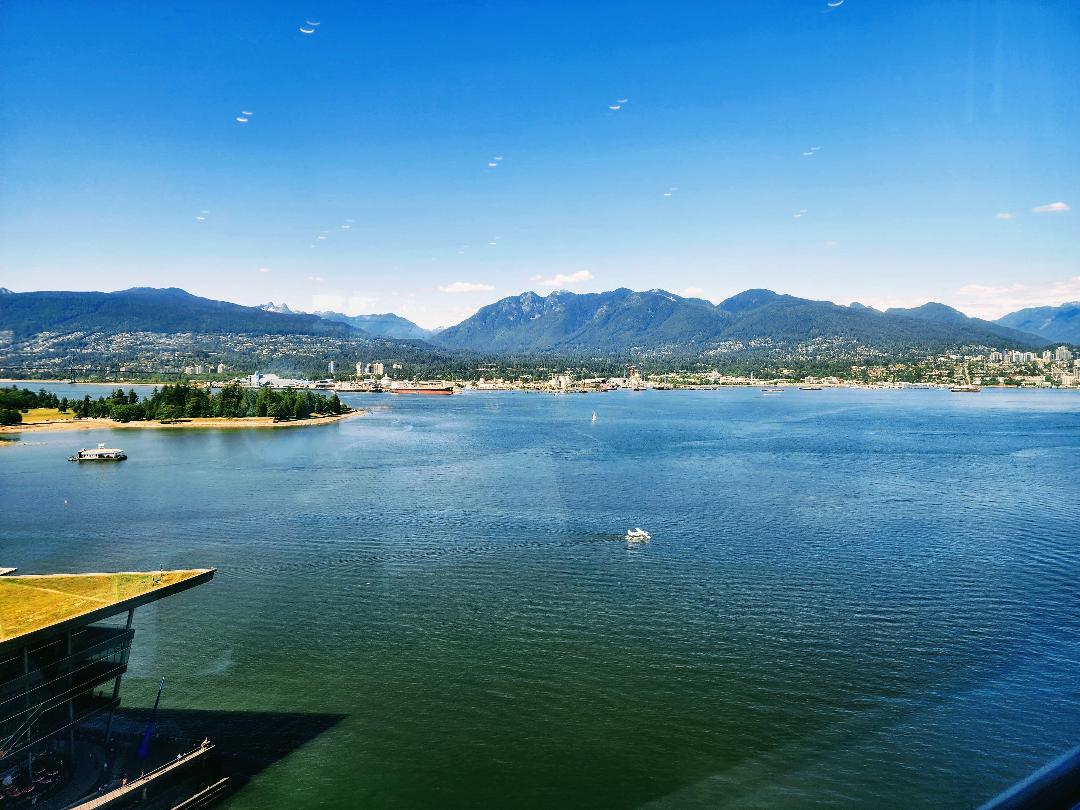
The day began again with breakfast at the Pan Pacific Club, 23rd floor.
Floor-to-ceiling windows.
Grey mountains.
Float planes.
The harbor below.
I dawdled a bit over coffee, but it was time to hit the road.
After checking out, I asked a security guard—who was coordinating the loading of approximately six hundred suitcases into what was almost certainly a cruise ship transfer van—how to get to the train station.
She looked at me quizzically.
“Go left. Turn the corner.”
Three days earlier, I had arrived from the right.
I pointed left.
She nodded.
Okay then.
This seemed completely wrong, but I decided to trust an expert.
Upon turning the corner, the train station that had somehow seemed mysterious and elusive upon arrival (Chad: “No, the other direction – find the water!”) stood about 20 paces ahead.
The city that had required maps, consultations, and occasional negotiations with Chad had apparently decided to cooperate.
Or perhaps I finally had.
Heading off, I had received a side smile and a discreet once-over from the security guard.
My luggage situation had become . . . ambitious.
There was Lady Nene in her hard travel tube.
There was the carry-on.
There was the puffer tote.
And there was a spectacular bouquet of flowers.
The whole arrangement looked less like luggage and more like a traveling production company.
The train ride to the airport was uneventful.
Which, after the previous few days, felt almost suspicious.
The rental car pickup was equally straightforward.
Again, suspicious.
At this point I began to wonder whether Vancouver had simply decided to stop fighting me because I was leaving.
Driving back through the city, I passed familiar landmarks.
The harbor.
(“Head for the water!”)
The streets I’d wandered.
(And wandered. And wandered.)
The ping-pong tables.
Those tables still made me smile.
For reasons I cannot adequately explain, they had become one of my favorite discoveries.
Not attractions.
Not landmarks.
Just ping-pong tables quietly existing in downtown Vancouver, ready for a game.
By then, however, Nanaimo and the iaido seminar were waiting.
The previous day had been all dove-grey harbor and wandering city streets.
Nitobe seemed illuminated from within.
Sunlight filtered through maples.
Stone lanterns appeared around corners.
Bridges reflected perfectly in still water.
Every path was designed not to reveal everything at once.
The garden invited you to slow down.
So I did.
Then there was the moss.
Now, I realize this is not a sentence most people begin with enthusiasm.
Nevertheless.
The moss.
The moss looked less like ground cover and more like a tiny landscape viewed from an airplane.
Little hills.
Little valleys.
Little forests.
The sort of terrain through which one imagines marble-sized expeditions setting out with backpacks and supplies.
Speaking of marbles.
Naturally, H’s cremarbles came with me.
Several of them found temporary homes among the moss and stones.
Tucked into little pockets of sunlight.
Nestled beside roots.
Hidden in plain sight.
Unless you knew where to look, you would miss them entirely.
Which somehow felt exactly right.
The garden itself was beautiful.
But what struck me most was the feeling of familiarity.
The paths.
The lanterns.
The water.
The tea house.
The careful way every view revealed itself slowly.
Not dramatically.
Patiently.
At one point I found myself standing outside the tea house, looking at the veranda and the rooms beyond.
And then I realized why the space felt so familiar.
The garden’s tea tradition is Urasenke.
The same tradition I studied this winter at Green Gulch Farm.
Suddenly what had felt merely beautiful became something else.
Recognizable.
Not because I had been there before.
Because part of me already knew how to be there.
The veranda.
The waiting bench hewn from a massive log.
The threshold between indoors and outdoors.
The careful attention to proportion.
The way the building encouraged looking rather than doing.
The way it invited stillness.
I found myself thinking that much of what I love about ryokan, Japanese gardens, tea rooms, and certain temples comes from exactly the same place.
None of them demand attention.
They reward attention.
There is a difference.
And perhaps that was another reason the garden felt so familiar.
It wasn’t introducing me to something new.
It was quietly reminding me of something I already loved.
Near the tea house stands a commemoration to both garden founder Dr. Inazo Nitobe (who wrote many, many books on the way of the samurai, bushido, etc.) and Professor Kannosuke Mori, the distinguished landscape architect who designed the garden as the final major work of his career.
Standing there, looking at the inscription, I found myself thinking about legacy.
Not the grand kind.
The quieter kind.
Creating something beautiful enough that decades later complete strangers wander through it on a sunny afternoon and leave calmer than they arrived.
Eventually I wandered over to the adjacent Asian Centre.
Partly because there was a washroom.
(Long drives reward a certain amount of planning.)
And there I encountered what may have been the most human thing I saw all day.
The path turns outward Not every lesson is deep Some just hold things up
The building contained beautiful artwork.
Elegant calligraphy. (Excuse the reflections on the glass)
Thoughtful displays.
Evidence of scholarship, tradition, and culture.
I admired all of them.
A peaceful place.
Hushed.
Students bent over studies.
Then I noticed the couch.
More specifically, I noticed one corner of the couch.
The corner being unobtrusively supported by books.
Large books.
Japanese books.
Two of them.
Holding up a couch leg.
I performed an actual double-take.
The entire building had spent considerable effort communicating wisdom, culture, beauty, and learning.
Meanwhile somebody had solved a wobbly couch with literature.
I never identified the books.
For all I know they were profound works of philosophy.
Or economics.
Or diplomacy.
Equally possible: carpentry.
Stability.
Furniture maintenance.
It was wonderfully human.
A reminder that even in places devoted to contemplation and beauty, somebody eventually has to solve practical problems.
“Does the couch wobble?”
“Yes.”
“Do we have anything heavy?”
“Books.”
”Done.”
Eventually it was time to continue north.
The ferry crossing came and went.
Lady Nene survived.
The luggage survived.
I survived.
And by evening I arrived at the Inn on Long Lake.
Where the bouquet found a new home.
The receptionist seemed delighted when I explained where the bouquet had come from and why I was passing it along.
After accompanying me through Michelin dinners, harbor sunsets, train rides, and ferry crossings, the flowers deserved a second act.
And then, there was nowhere I needed to be.
The luggage had exploded across every available surface.
The sword was finally out of the hard case.
(This is when I discovered that, in their zeal to examine Lady Nene, TSA had managed to rip her silk sleeve. Yes, take that exactly as intended. Given Lady Nene’s temperament, I suspect she may arrive at this evening’s practice harboring thoughts of vengeance. I will take appropriate precautions.)
And for the first time all day, I sat down and looked out over the lake.
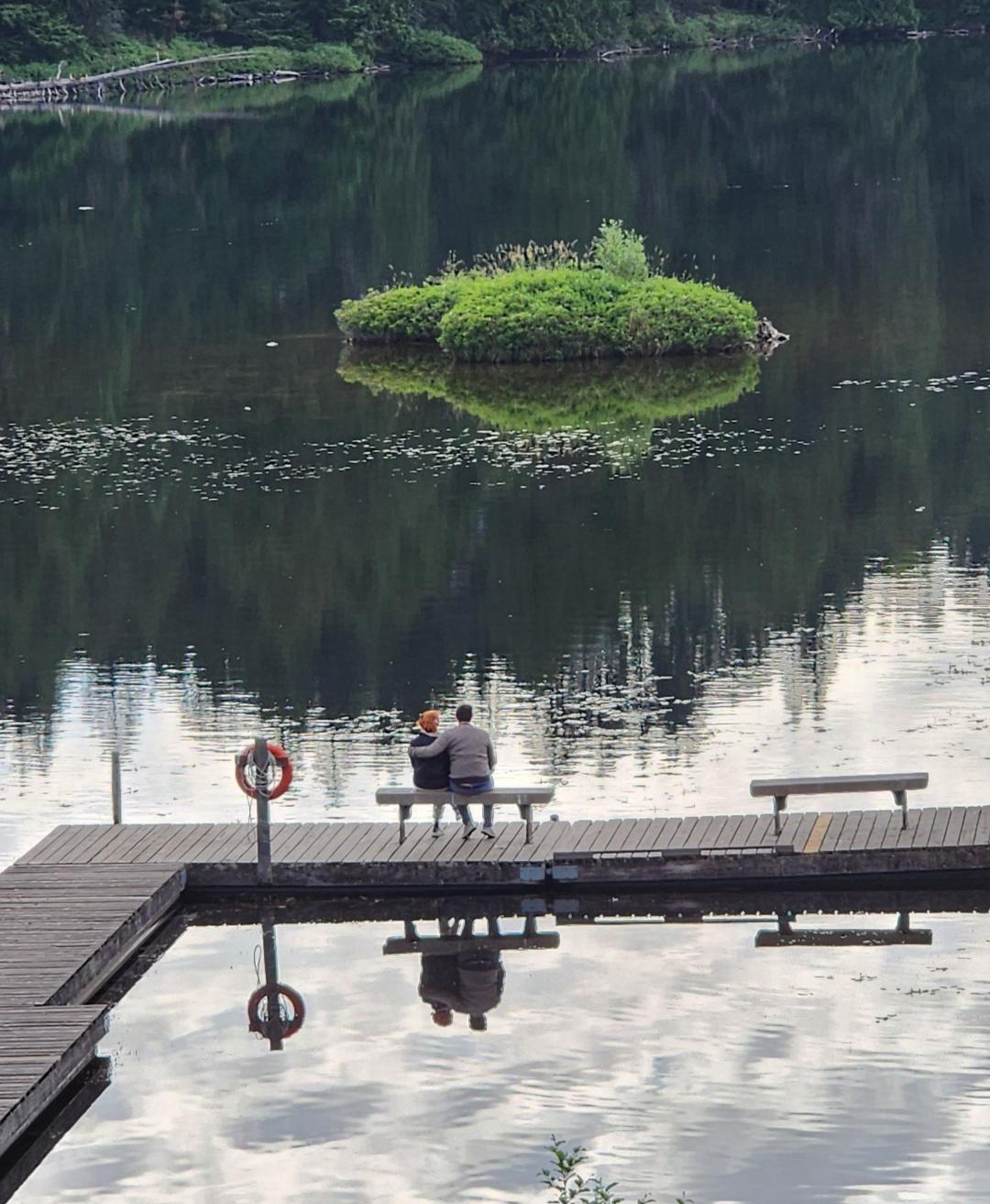
That’s when I noticed the couple.
Farther out sat a tiny island.
Not much bigger than a shrub.
The lake reflected everything.
The island.
The trees.
The sky.
Even the couple.
The whole scene felt strangely familiar.
And then I realized why.
Suddenly, I was at the Ripplecove.
Let me explain.
Years ago, on our honeymoon, H and I found ourselves at the Ripplecove Inn.
Actually, that’s not quite true.
We found ourselves on the road to somewhere else.
In fact, Ripplecove was never supposed to happen at all.
Like many newlyweds traveling on a budget, H and I had become unexpectedly wealthy through airline incompetence. We had been bumped from a flight and received travel vouchers, which we promptly converted into a honeymoon in eastern Canada.
The furthest the vouchers would take us was Halifax.
So Halifax it was.
People would ask where we were honeymooning.
“Nova Scotia.”
One memorable person asked which island near Bali that was.
We spent time in Halifax, Nova Scotia, PEI, rode an Art Deco train across portions of eastern Canada, visited Montreal and Toronto, took a slow paddle wheeler river cruise through the Thousand Islands during prime autumn color season, and generally had a wonderful time.
H planned almost the entire trip.
I planned exactly one section.
The wine country section.
I researched it.
I organized it.
I had routes.
I had a plan.
The map and I were in complete agreement.
Then, on the morning we were supposed to begin that carefully planned section, H looked at the map and said:
“What if, here, we head left instead of right?”
Then, because he was both wise and interested in remaining married (this time), he immediately added:
“But if that’s even a tiny problem, we won’t.”
I thought about it for approximately three seconds.
Or rather, let’s start with the challenge of leaving breakfast.
The Club Floor at the Pan Pacific turns out to be a dangerous place for anyone who enjoys treats, harbor views, and absolutely no obligations.
One can easily imagine spending the entire morning there.
Or the entire afternoon.
Or perhaps retiring permanently.
If you stay on the Club Floor, breakfast (and afternoon tea) is included. Instead of heading downstairs and having breakfast with the hoi polloi (which there are a fair bit of, as apparently this hotel is chosen by Regent, Seven Seas, Seabourn, and others to house their guests before heading out on their cruises), the buffet is curated and brought up to you.
Civilized.
Getting there at 7:00 seems to be the sweet spot. My window table overlooked the very grey harbor. I took my time; when I got up to leave, I noticed that many folks with towering piles of food had been eyeing my table like wolves. 🐺🥐☕️
Though looking grey and overcast, Vancouver existed outside the windows.
So eventually I gathered myself together and ventured forth.
My original destination was the Bill Reid Gallery.
Not because I needed anything.
Not because I planned to shop.
Because Bill Reid is Bill Reid.
This is one of our dancing walruses (walri?), but you get the idea.
Bill Reid Gallery is not just a gallery but also essentially a museum of First Nations art. Those of you who have visited our Indiana Jones house know that First Nations art occupies a rather disproportionate place in our lives.
It all started in Vancouver.
Years ago, on our tenth anniversary trip, H and I bought our first piece of First Nations art from Coastal Peoples Gallery.
A small dancing bear.
At the time, we were younger and considerably less financially sensible.
Or perhaps more financially adventurous.
Either way, we bought the bear.
Or rather, H pondered over the bear, picked him up, turned him around, stood him on his front paws, then his back paws. (These are called “two-position bears” and are carved to stand in either pose.)
Eventually he sighed and put the bear back down.
A few minutes later, while H was distracted elsewhere in the gallery, I quietly handed my credit card and bucket purse to the salesperson and mimed exactly what needed to happen.
A few days later, at our anniversary dinner on Salt Spring Island, I pulled out the bear and carefully balanced him on his back paw next to H’s champagne glass.
That bear became the beginning of an obsession. Oh, I mean a collection.
So while I was starting at the vaunted Bill Reid Gallery, I wanted to be sure to revisit Coastal Peoples.
Not to buy anything.
Just to visit.
Sometimes travel is about seeing new things.
Sometimes it’s about checking in on old stories.
The Bill Reid Gallery itself was fascinating. It’s really more like a First Nations art museum (with admission fee). I peeked in, but wasn’t really feeling like a gawk-and-stop, so I headed into the gift shop.
Not because I intended to buy anything.
Just a look-see.
Okay, until I found a First Nations octopus passport holder.
More accurately, the octopus found me.
For years my passport lived inside a blue cover from the Elliott School of International Affairs at George Washington University.
It was a perfectly nice passport cover.
Professional.
Respectable.
A little impressive, perhaps.
It represented a version of me that worked very hard to become the person who negotiated international agreements, earned credentials, and accumulated expertise.
This week, in Vancouver, I replaced it.
Not because it was worn out.
Not because I needed a new passport cover.
Because I wandered into a gallery shop and spied an octopus.
The octopus is Haida art—bright blue, impossible to miss, and infinitely more interesting than a school logo embossed on blue leather.
What struck me later wasn’t that I preferred the octopus.
It was why.
The old cover represented achievement.
The new cover represents curiosity.
One says, “Look what I accomplished.”
The other says, “I wonder what’s over there.”
And the funny thing is that I don’t feel like I’ve rejected the first version of myself.
The octopus didn’t replace the international negotiator.
The octopus stands on top of everything that came before.
The degrees.
The career.
The experience.
The miles traveled.
The losses survived.
The confidence slowly earned.
Perhaps that’s why it felt right.
An octopus is curious, intelligent, adaptable, and capable of getting into places it probably shouldn’t.
Which, come to think of it, is a fair description of my travel style.
Or my life.
Besides, I suspect future me will smile every time she pulls out her passport and remembers Vancouver.
The harbor.
The mountains.
The seals.
The eagle.
The day I discovered that “walk away from the water” apparently constitutes a complete set of directions.
And the moment I realized that the objects I love most are no longer the ones that remind me what I’ve done.
They’re the ones that remind me who I’ve become.
At this point, it was time to head for Coastal Peoples Gallery.
At some point Chad became convinced that Coastal Peoples was somewhere else entirely.
An office building, as it turned out.
This led to a period of increasingly confused text messages in which I attempted to explain that I was standing exactly where I had been told to stand and yet somehow was not standing in an art gallery.
Meanwhile, Chad attempted to reconcile this inconvenient fact with his growing certainty that I was in the correct location.
Reader, I was not.
Eventually I resorted to Google Maps.
There, glowing innocently on the screen, was Coastal Peoples Gallery.
Right where I had originally thought it was.
Near the Steam Clock.
The Steam Clock, by now, had become less a destination and more a principle.
I had gone so far the wrong way that Chad suggested a taxi. (He didn’t offer to flag one down or pay for it, though.)
His directions went off the rails at this point. When I realized I was heading into what could only be described as a “sketch” neighborhood (and no Victorian Steam Clock to be found), I resorted again to Google Maps.
Yep.
I was in Saskatchewan.
Eventually, after chastising Chad, who explained that somehow geography had temporarily bent in a manner that made South go North (dear reader: yeah, nope), I made my way to Gastown.
I never actually saw the Steam Clock.
But while standing inside Coastal Peoples Gallery, I heard it.
Which somehow feels okay.
If one spends an hour looking for the Steam Clock and ultimately experiences it as an audio installation, one should probably accept the outcome gracefully.
Once I finally arrived at Coastal Peoples, I found exactly what I had come looking for.
Not merchandise.
Memory.
The dancing bears were still there.
Not our dancing bear, of course.
That bear lives at home.
But bears like him.
The same feeling.
And amazing narwhals, raven masks, silver and gold jewelry.
A new silver Haida raven ring—H’s totem animal—somehow made it onto my finger.
The trip seemed determined to place old memories and new acquisitions side by side and see what happened.
And then there was Sabera.
A small diving bear, way down on a lower shelf. Almost out of sight.
The same size as the dancing bear H and I bought all those years ago.
At this point, Chad and I began what he believed was a thoughtful discussion about whether I should buy the bear.
He asked what I liked about her.
What I felt when I looked at her.
Whether she spoke to me.
Whether she represented something.
What followed was a surprisingly deep conversation about art, memory, and connection.
There was only one problem.
I had already bought her.
My American Express card had been handed over.
The paperwork was complete.
The shipping address had been provided.
The transaction had occurred.
I was not evaluating Sabera.
I was introducing her.
Somewhere during this exchange with Chad, voice-to-text transformed “the bear” into “Sabera.”
Chad confidently continued to posit whether bringing “Sabera” home would be the right thing to do (meanwhile, I was already walking back to the Pan Pacific, my slightly warm Amex in my pocket), and I had to stop.
Where’d the name come from?
I had originally sent Chad a photograph of the diving bear’s tag, with the artist’s information on it. This is because the salesman was cradling her like a baby, so I couldn’t send a photo of the genuine article.
Perhaps the name had been on the tag?
What followed was a “Who’s on First?” moment between Chad and me.
“How’d you know her name?”
“You told me her name.”
“No, I didn’t – was it on the tag?”
“You did.”
“When?”
“A second ago – you said I didn’t understand that you’d already bought Sabera. And if you’ve already named her, there’s no going back.”
”I didn’t tell you.”
”Yes, you did.”
”When?”
”Just a second ago.”
I pause, scroll back through the conversation – and discover the voice-to-text conversion.
Since this was objectively a better name though, it immediately became canonical.
I regret nothing.
By late afternoon I returned to the Pan Pacific.
This is where the day took an unexpected turn.
Housekeeping needed the room.
I needed to get ready for dinner at Botanist.
What followed was less a cleaning service and more a temporary treaty between sovereign nations.
“You take the bedroom. I’ll take the bathroom.”
And thus we achieved peace in our time.
While housekeeping conquered one half of the room, I occupied the other, attempting to transform myself from “woman who has walked all over Vancouver, perhaps by way of Seattle” into “woman who can slowly saunter into a Michelin-starred restaurant without a care in the world.”
The arrangement worked surprisingly well.
Once makeup, hair, and such were done, time to switch.
They did the bathroom.
I changed into dinner attire.
Everybody won.
Also, for those wondering: yes, I wore the same white button-down shirt from the night before.
And yes, it was still crisp and white.
Despite an unfortunate encounter with red wine.
Thank goodness for Tide pens.
Eventually it was time to head for the Fairmont Pacific Rim.
The hotel was already preparing for the World Cup. Soccer balls and jerseys in cases were everywhere.
I was ushered in by doormen wearing curious felt hats decorated with a spray of feathers that looked suspiciously like fishing lures.
The effect was Austrian.
Or Bavarian.
Or perhaps simply Vancouver deciding to be Vancouver.
And from there, you already know the rest.
The library.
The kitchen.
The champagne.
The scallop.
The card.
The cookies.
The people.
The thing I remember most about that day, though, is not any single destination.
It was the wandering.
The realization that some of my favorite travel days begin with a plan and end somewhere entirely different.
A gallery became a memory.
An octopus became a philosophy.
A sculpture became Sabera.
And somehow, in between Five Sails and Botanist, Vancouver quietly became itself.
As I write this the following morning, I am back on the Club Floor, looking out at the same dove-grey harbor.
In fact, I had to stop typing a moment ago because a seagull floated very very slowly past the window, scratching under its chin with one foot, eyes closed in obvious satisfaction.
He looked exactly like Bruno when someone finds the spot behind his ear.
I have no idea how a bird manages to look smug while flying.
Yet there we were.
Vancouver.
Honestly, that feels like an appropriate final image for this trip.
But reality is calling.
The suitcase needs packing.
The room needs vacating.
There is a train to catch.
And somehow I need to transport a zip-tied sword case, a carry-on bag, a puffer tote, and a spectacular bouquet of flowers across greater Vancouver without looking completely ridiculous.
Which means it is time to stop writing and start moving.
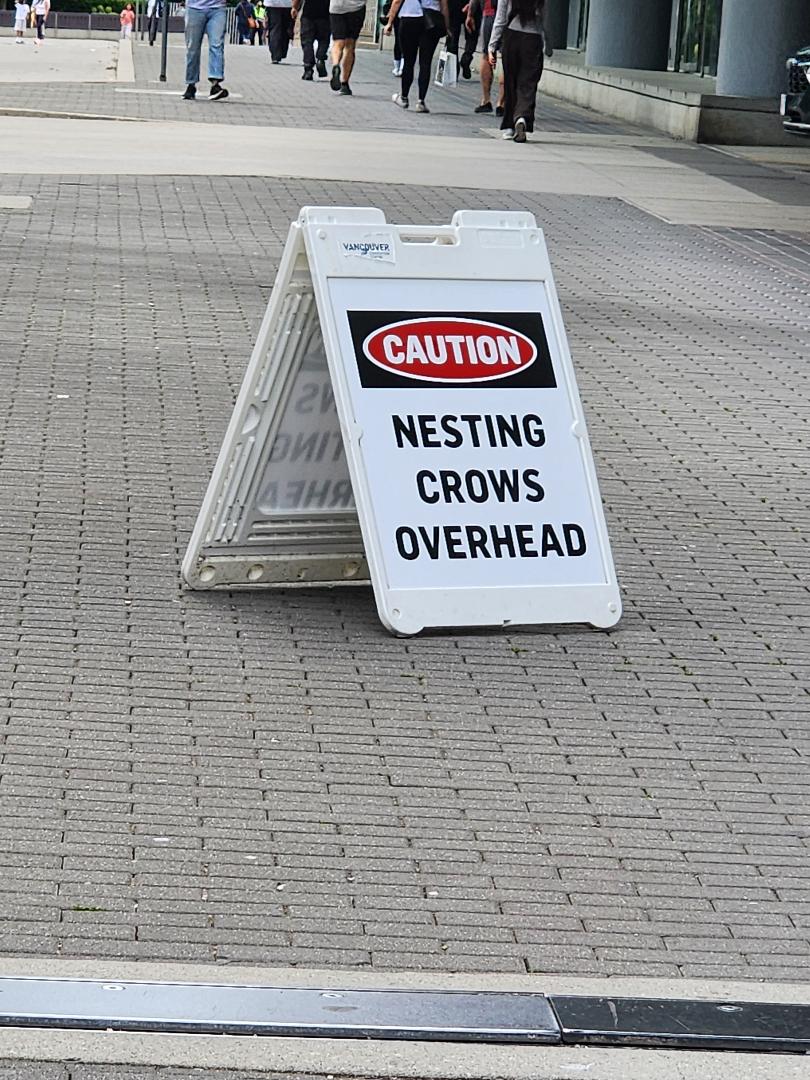
Crows watched overhead A promise found its harbor An extra place set
I arrived at Botanist about fifteen minutes early.
(Okay, okay, after the rest of the day, I was expecting to get to the venue, a block away, via Singapore.)
The hostess offered me a choice.
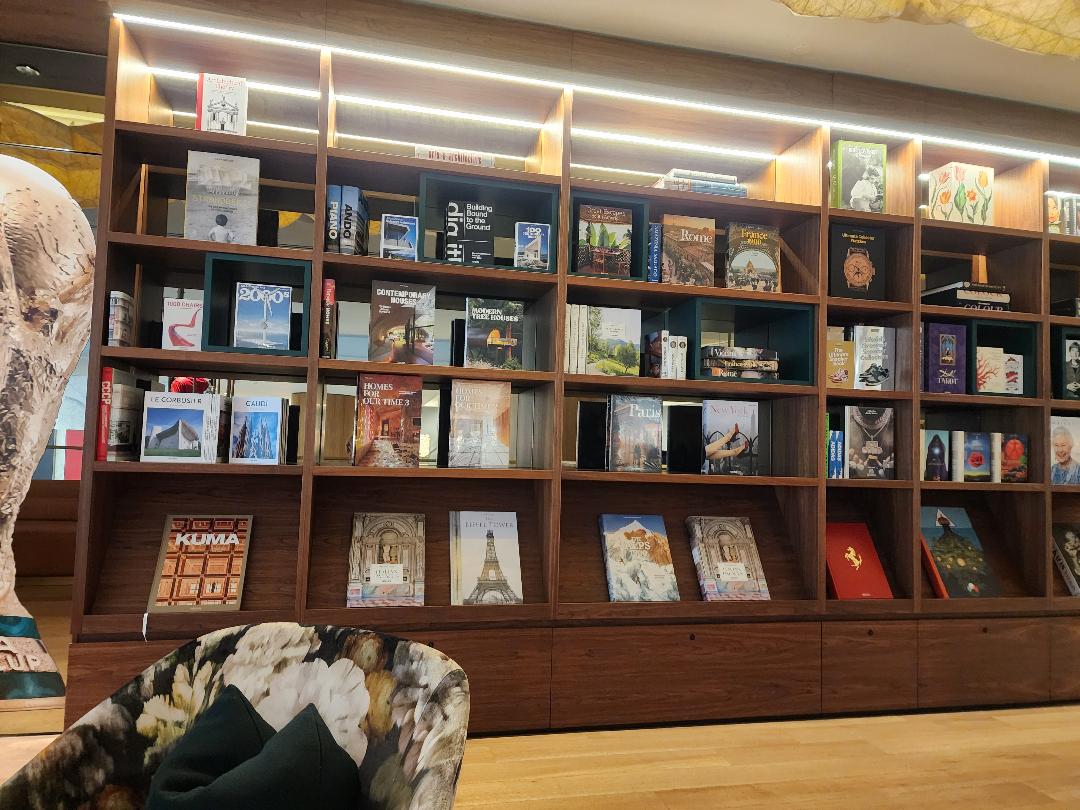
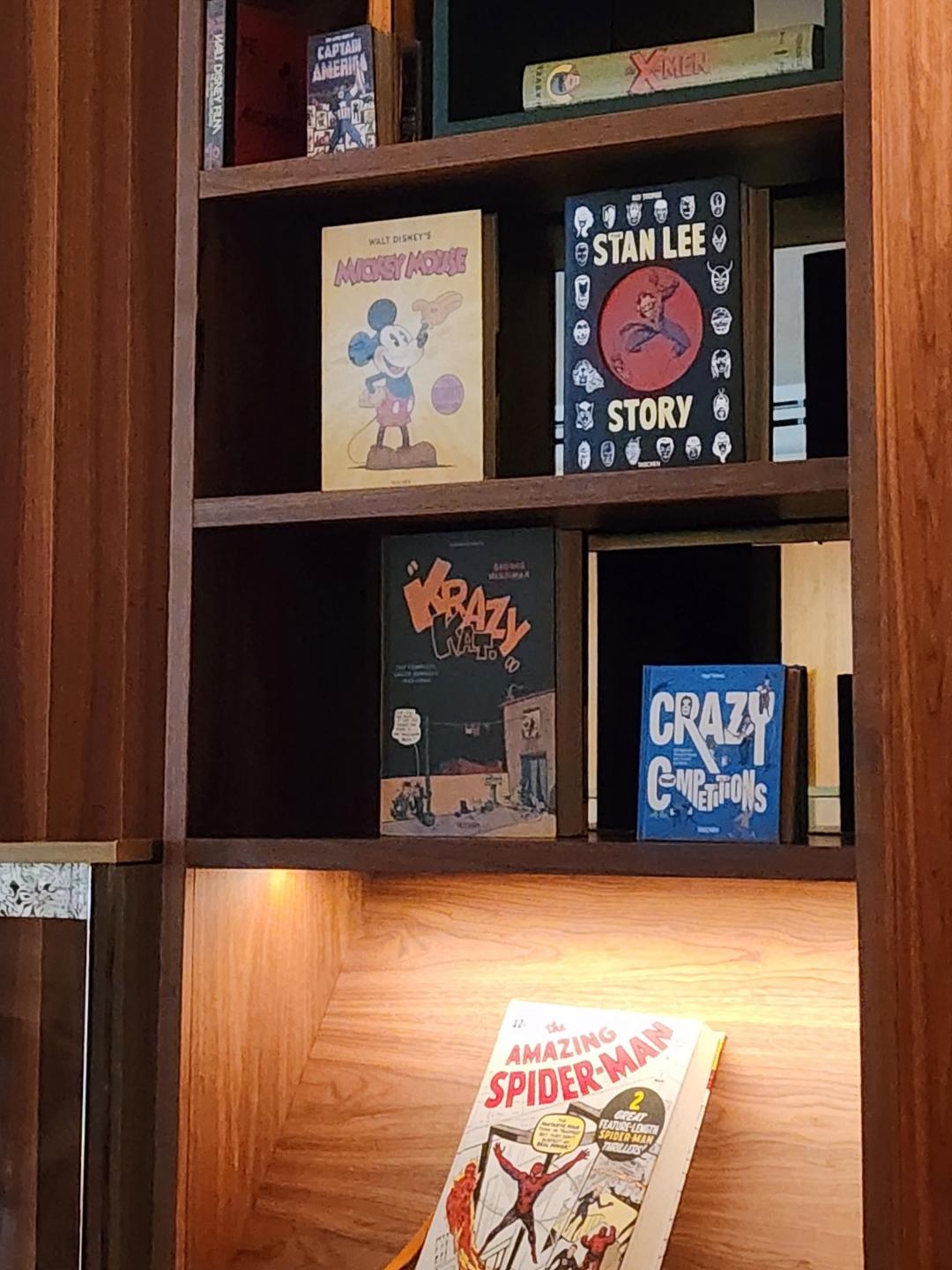
I could wait at the bar, or I could browse their library of limited-edition Taschen books.
It was, I decided, perhaps a teeny tiny bit bougie.
Having successfully walked three-quarters of the way around the Fairmont Pacific Rim to find the entrance (a personal tradition at this point), I settled in to wait for my table.
Once seated (the only patron in the establishment), I watched the kitchen staff slowly arrive. They pulled down the heat lamps, suspended on long white coils from the ceiling. Polished the marble cold stations. Started the engines. I mean stoves. Sharpened the tweezers.
The evening was off to an excellent start.
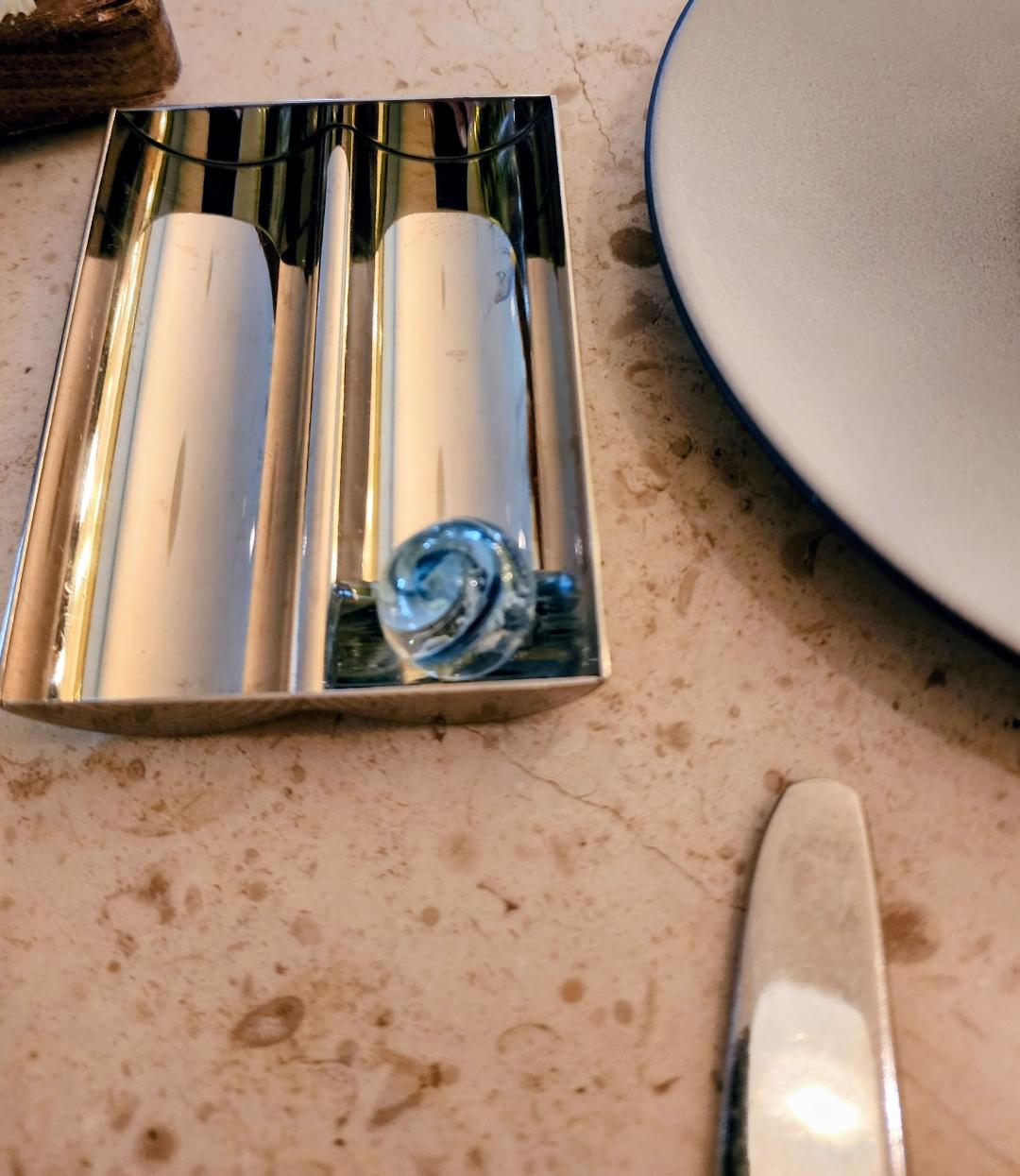
Larry, my server, said he understood that I was recreating an anniversary trip H and I had planned years ago (but never quite managed to take). I showed him Herbert’s cremarble and about twenty minutes later he arrived with a small cradle they normally use to display very special wine corks from very special bottles at guests’ tables.
Not a grand gesture.
Not a performance.
Just a small acknowledgment that there was supposed to be someone else at the table.
Sometimes hospitality isn’t making someone feel special.
Sometimes it’s making someone feel accompanied.
Larry seated me at Table 31.
Best seat in the house.
A banquette directly facing the open kitchen.
Some people want the view.
I wanted the chefs.
The kitchen was a ballet.
The expediter somehow knew everything happening everywhere all at once. The sous chefs never seemed rushed. Jo, from Jakarta, appeared whenever he was needed. The dishwasher moved quietly through the choreography. And overseeing it all was the executive chef, originally from Birmingham, England.
The thing that struck me wasn’t discipline.
It was joy.
People respected her.
But more importantly, they seemed to genuinely like her.
And she seemed to genuinely like them.
I mean, amongst the barked orders and the “Yes, Chef!“s.
Three times during dinner she came over to chat.
Three.
And lest you think she was making the rounds of the dining room, she wasn’t.
She never visited another table.
Just Table 31.
Apparently there is something unmistakable about a woman sitting alone, watching the kitchen with the concentration normally reserved for playoff hockey.
But let’s talk about the food and the wine for a second.
I mean, it’s a restaurant after all.
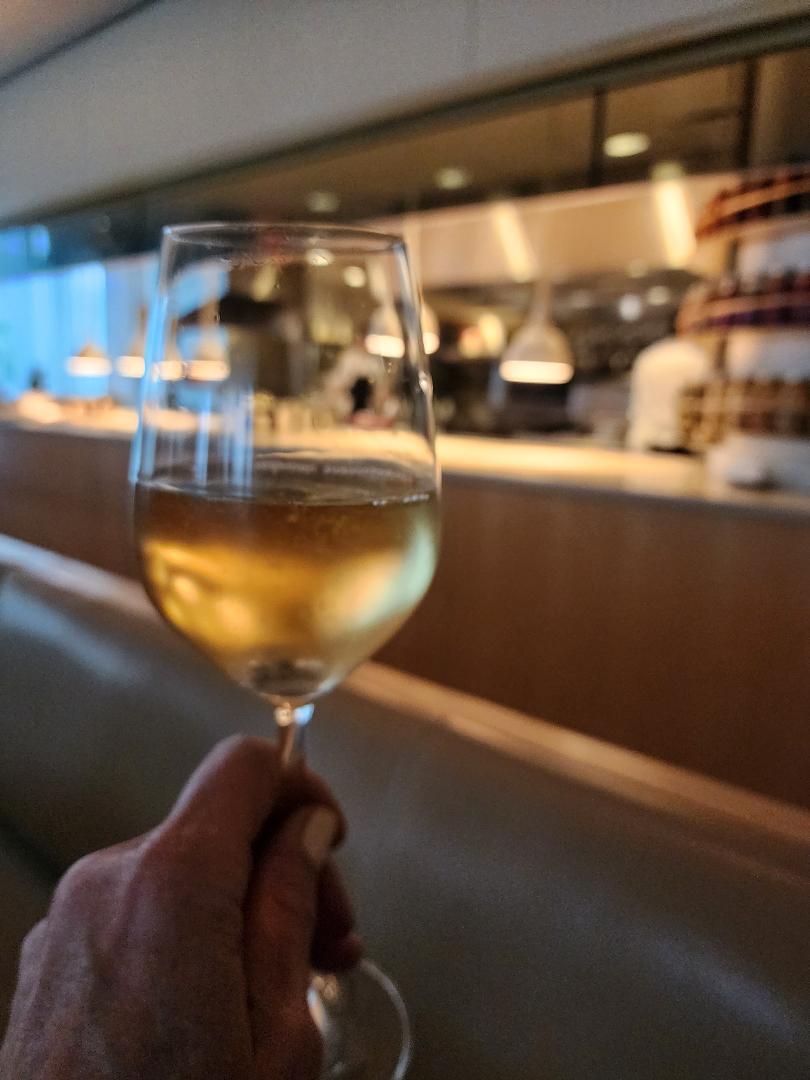
The first wine was a sparkling wine made from Meunière that tasted of bruised apples and a touch of salt from the sea.
I slipped one of H’s marbles into the glass.
Jo had nearly cleared it away about two minutes earlier before realizing it wasn’t table clutter but, in fact, a marble.
I explained. He looked horrified at his near mistake.
When I dropped it into the champagne, I raised the glass toward him and winked.
He laughed.
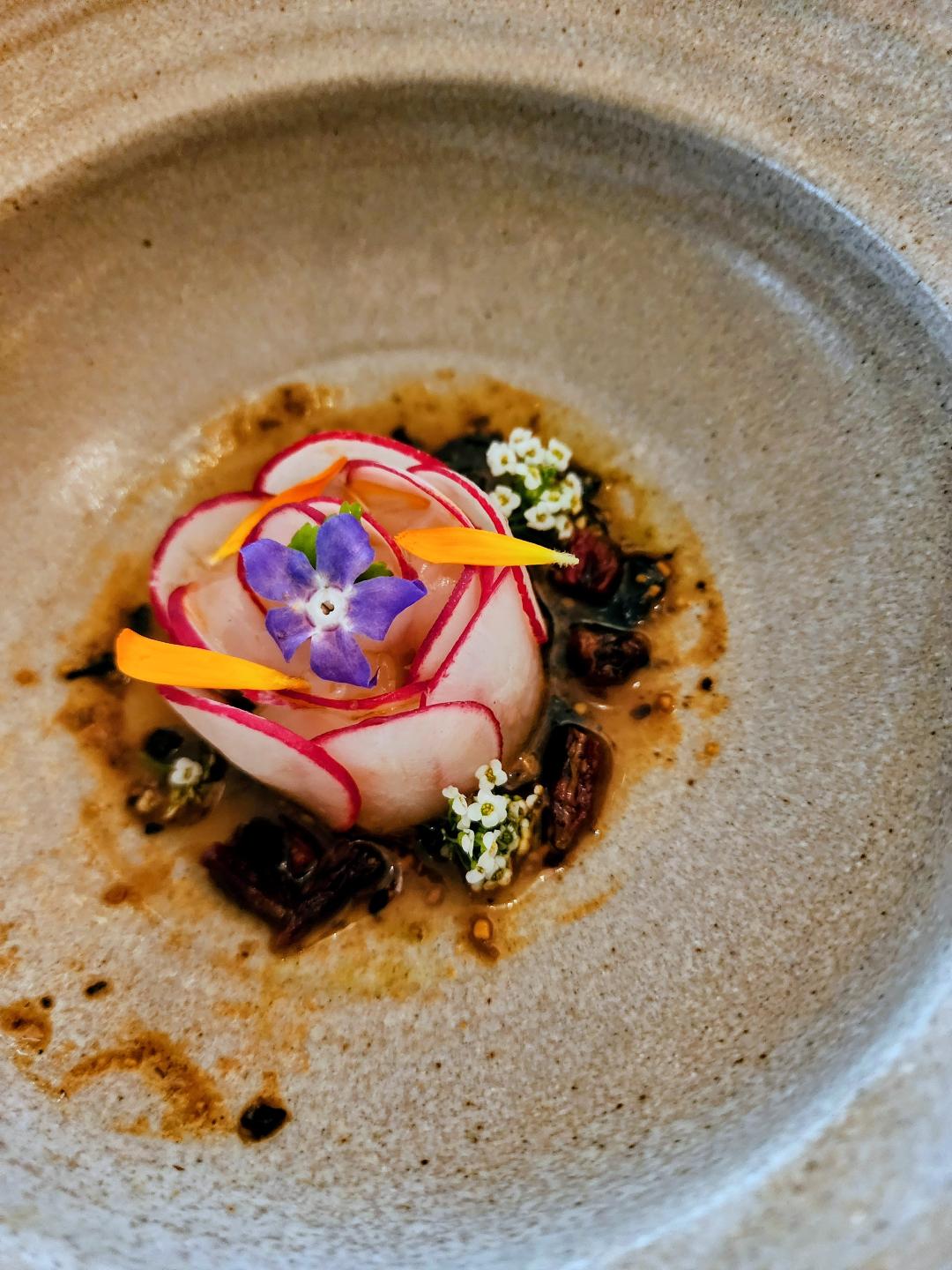
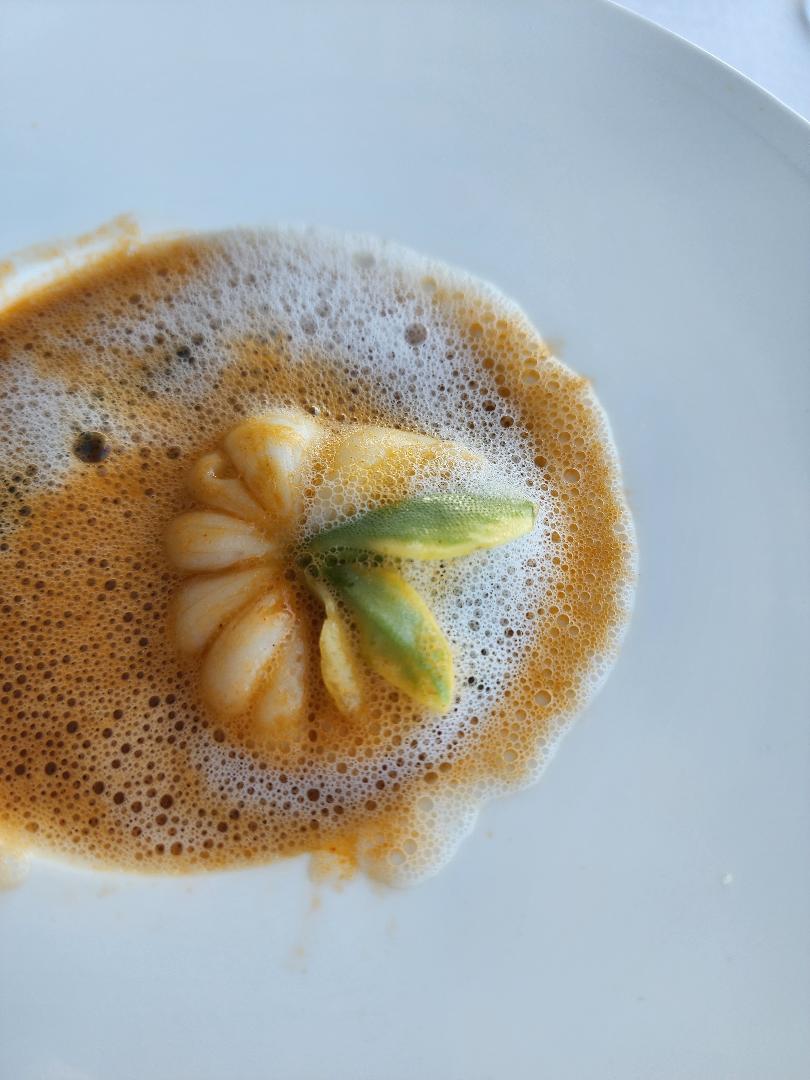
One of the most beautiful dishes of the evening was a scallop.
And radishes.
They had been marinated in the same spicy preparation, creating an unexpected bridge between them. A tiny borage flower sat on top.
The dish looked like a flower.
It tasted like a conversation.
There were other dishes.
And other wines.
And lots of kitchen-watching (me).
Then came the chicken.
Now, don’t misunderstand me.
Everything was excellent.
But this was the dish that made me stop and pay attention.
Perfectly cooked chicken with impossibly crisp skin, morels, vegetables, broth, and enough depth to make me immediately understand why people remember certain dishes years later.
This was not the prettiest thing I ate.
It may have been the most satisfying.
The wine pairing provided one of the evening’s most interesting surprises.
Twice I found myself leaving wine in the glass.
The wines were perfectly good.
The pairings simply weren’t doing much for me.
The Somm appeared mildly distressed by this development.
I asked whether half pours were possible.
Apparently they were not.
Then came the wagyu.
The sommelier appeared carrying two wines.
One was the pairing he normally used.
The other was not.
The glasses were labeled simply “1” and “2.”
Wine #1 was a perfectly respectable Chianti.
Wine #2 stopped the conversation.
I was convinced it was Burgundy. It had what I privately call “Pinot bite.”
It wasn’t Burgundy.
It wasn’t even a Pinot. (So much for all that expensive Somm training I did – whut-WAHH)
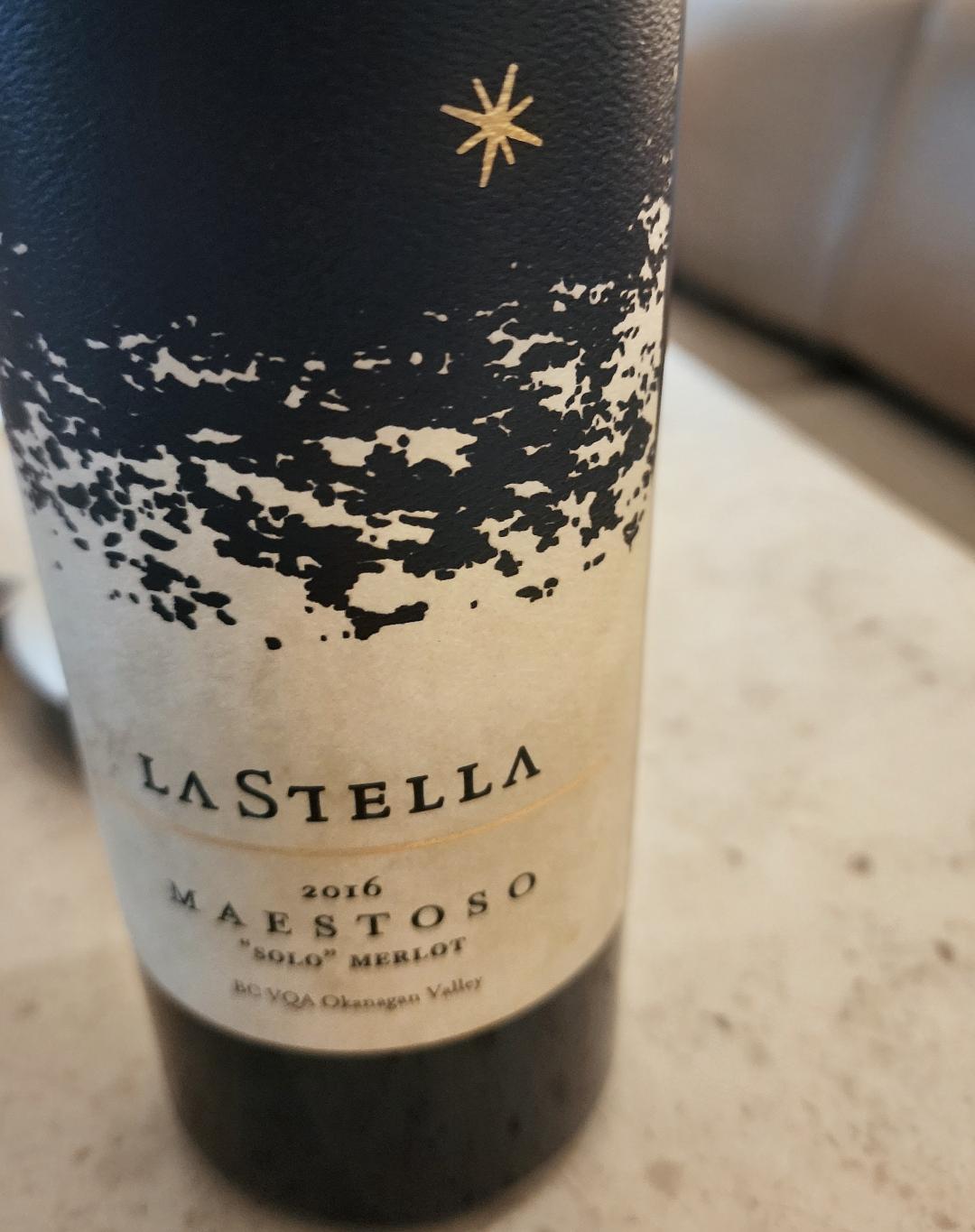
It was a British Columbia Merlot.
A 2016 LaStella Maestoso.
With the wagyu it was transformative.
After that, I never touched Wine #1 again.
The Somm looked delighted — and relieved.
Near the end of the meal I asked Larry for a piece of paper and a pen.
What I received was a strip of receipt paper from the credit-card machine and Larry’s pen.
I wrote a note to the chef.
Not about the food.
About the team.
About the dishwasher.
About the sous chefs.
About the expediter.
About Jo.
About the way she had built a kitchen where people seemed to genuinely enjoy working together.
About how obvious it was that they respected her.
And how obvious it was that she respected them.
I hope, when she read it, it was aloud to the staff.
Because I wanted them to know that Table 31 noticed.
The expediter.
The dishwasher.
Jo.
The tiny adjustments.
The perfect timing.
All the hundreds of little things that add up to what people call hospitality.
The tiny things.
Which, of course, are really the big thing.
When the evening ended, Larry handed me a card.
Signed by everyone.
Every signature different.
Every person adding their own name.
(As if the signed anniversary card wasn’t enough, they tucked a bag of cookies into my hands for the walk back to the Pan Pacific.)
I had come expecting an excellent dinner.
And it was.
But that isn’t what I carried away.
What I carried away was the reminder that great hospitality isn’t really about luxury.
It’s about attention.
It’s about kindness.
It’s about making room for people.
For memories.
For stories.
For absent husbands represented by cremarbles.
For solo travelers recreating old promises.
For someone sitting at Table 31 watching the kitchen with far more fascination than dignity.
The food was wonderful.
The wine was memorable.
But what made the evening unforgettable was the people.
And for a few hours at least, they made room at the table for Herbert too.
Harbor sunset glows A promise waits patiently Past the turning years
More than a decade ago, H and I spent our 10th anniversary in Vancouver.
Like many couples celebrating an anniversary on a bit of a budget, we spent a certain amount of time looking at things we couldn’t quite justify.
The Pan Pacific Club Floor.
A few Michelin-starred restaurants.
The sort of places where you say:
“We’ll come back for our 20th and do Vancouver right.”
Then you go have a perfectly lovely dinner somewhere else and continue on with life.
As it turns out, life had other plans.
This week I found myself back in Vancouver, staying on the Pan Pacific Club Floor and holding a reservation at Five Sails.
Not because I had carefully planned some symbolic pilgrimage.
Simply because it felt like it was time.
The evening began with champagne and one of H’s and my favorite strategies for chef’s tasting menus + wine.
Half pours.
Experience all the wines.
Avoid drinking the entire vineyard.
The menu was called From Sea to Shore, a culinary journey through the ecosystems of British Columbia. Each course moved a little farther inland, telling the story of the province through food and wine.
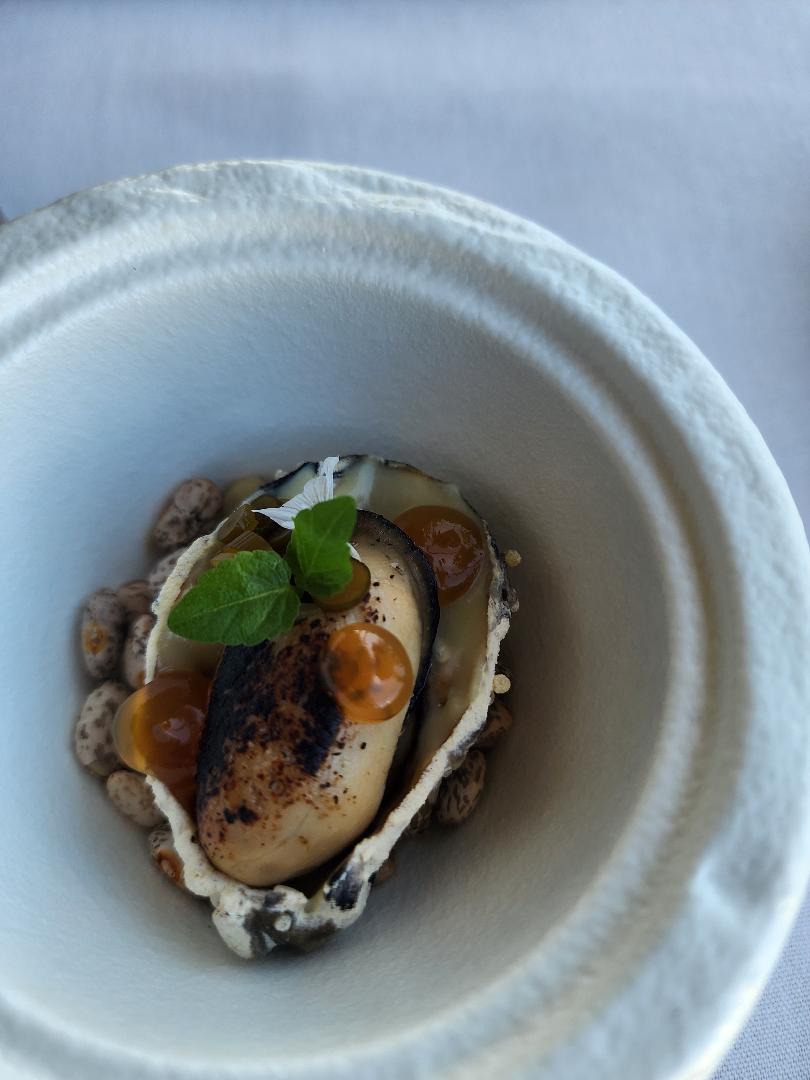
We began in the coastal waters with oysters, shrimp, seaweed, citrus, and Champagne.
A scallop course followed that was so absurdly good that I briefly considered whether it would be socially acceptable to lick the bowl.
The answer, for the record, is Yes.
When I confessed this to Antoine—the sommelier—he laughed and told me a story from his days working in a Michelin-starred restaurant in France.
One evening he brought a dish back to the kitchen and sheepishly pointed out that a guest had very obviously used a finger to capture every last trace of sauce.
Rather than being offended, the chef was delighted.
As Antoine explained it, the chef’s view was simple: as babies, we experience food with complete enthusiasm and without self-consciousness. If a dish is so good that it inspires that level of involvement in a grown adult, there is no greater compliment.
I felt considerably better after hearing that.
The wines shifted with the landscape. Champagne gave way to cider. Aged Chardonnay appeared alongside shellfish bisque and asparagus. Sake. Whites. Reds.
Every pairing seemed designed not simply to accompany the food, but to tell the same story in a different language.
Then something unexpected happened.
Martina appeared beside my table and asked if I would like to see a secret.
This is generally not a question I am inclined to refuse.
So I followed her.
Past the dining room.
Down a dark quiet hallway.
And into the bright, bustling kitchen.
I turned a corner and found myself standing in the middle of a world-class restaurant in full motion.
Chefs moved with extraordinary focus.
Orders appeared and disappeared.
Plates materialized.
Finished dishes returned to the pass and were discussed with the same seriousness as those heading out to the dining room.
Why was something left behind?
Was the guest finished?
Did they enjoy it?
What could be learned?
Conversations were brief and purposeful.
Everything somehow looked both impossibly busy and completely under control.
Then I was presented with a forest floor made of bones.
At least that is the only description I can honestly offer.
Branches.
Twigs.
Chicken feet.
Cracked bones.
Mossy-looking things.
It looked less like a restaurant presentation and more like something discovered during an archaeological excavation.
Perched on top was a delicate liver pâté with rhubarb. A glass of Amaro Nonino sat patiently nearby.
The explanation, fortunately, was more coherent than my initial assessment.
The menu was moving from sea to land, and this forest floor marked the transition.
It was magnificent.
It was also slightly alarming.
Back at the table, the journey continued through Fraser Valley chicken, spring lamb, beef cheeks, an amazing morel on a skewer, berries, honey, spruce tips, and . . . The details blur together now.
The feeling does not.
At some point I began asking questions.
This is generally where things become dangerous.
Remember Antoine the sommelier?
Antoine from Avignon.
Rather than politely answering my questions briefly and escaping, he made the tactical error of appearing to enjoy them.
What followed was an extended discussion involving wine, old bottles, food pairings, aging potential, cellar management, and eventually a giant Portuguese port bottle that appeared capable of serving a medium-sized village.
Truly.
How he even poured from it suggested muscles lurked beneath the impeccable suit jacket. The thing had to hold at least a couple of gallons when full.
When I asked what size it was, we worked our way through magnums, jeroboams, methuselahs, and various other bottle sizes before Antoine finally shrugged and said:
“Well, it’s from Portugal, so who knows what they call it.”
This remains one of my favorite wine explanations ever received.
At another point, after hearing my lament that I had accumulated a cellar full of wine and only one person left to drink it, Antoine disappeared and returned carrying a lovely old bottle, topped by a Coravin.
What followed was less a demonstration than an intervention.
A few minutes later I was tasting an excellent Bordeaux while learning how one might responsibly own far more wine than one can reasonably consume . . . and still consume it.
This may have been the most effective sales presentation in history.
The service throughout the evening was extraordinary.
Martina somehow managed to make a full dining room feel as though she had all the time in the world.
Summer, whose true passion is dance, appeared throughout the evening helping the service team. At one point she handed me her Instagram information in case I happened to be able to make it to her performance on the 5th. (You know, when I will be in Nanaimo for my raison d’etre…)
Eventually the meal came to an end.
Or so I thought.
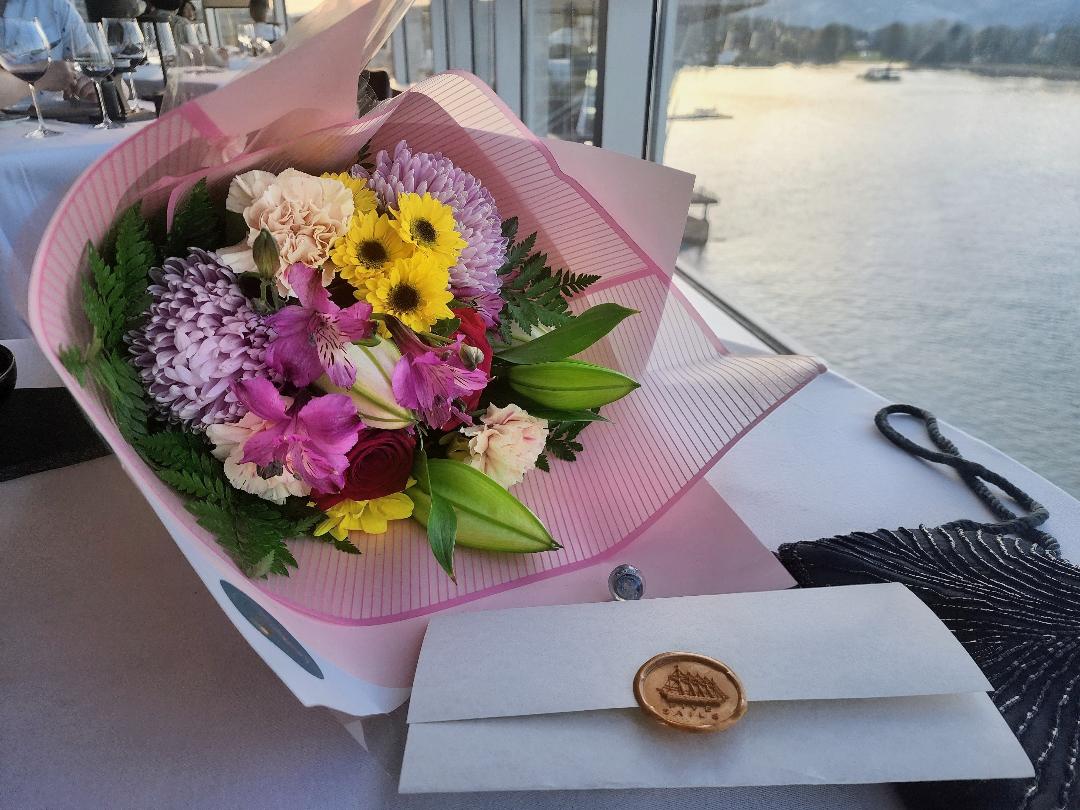
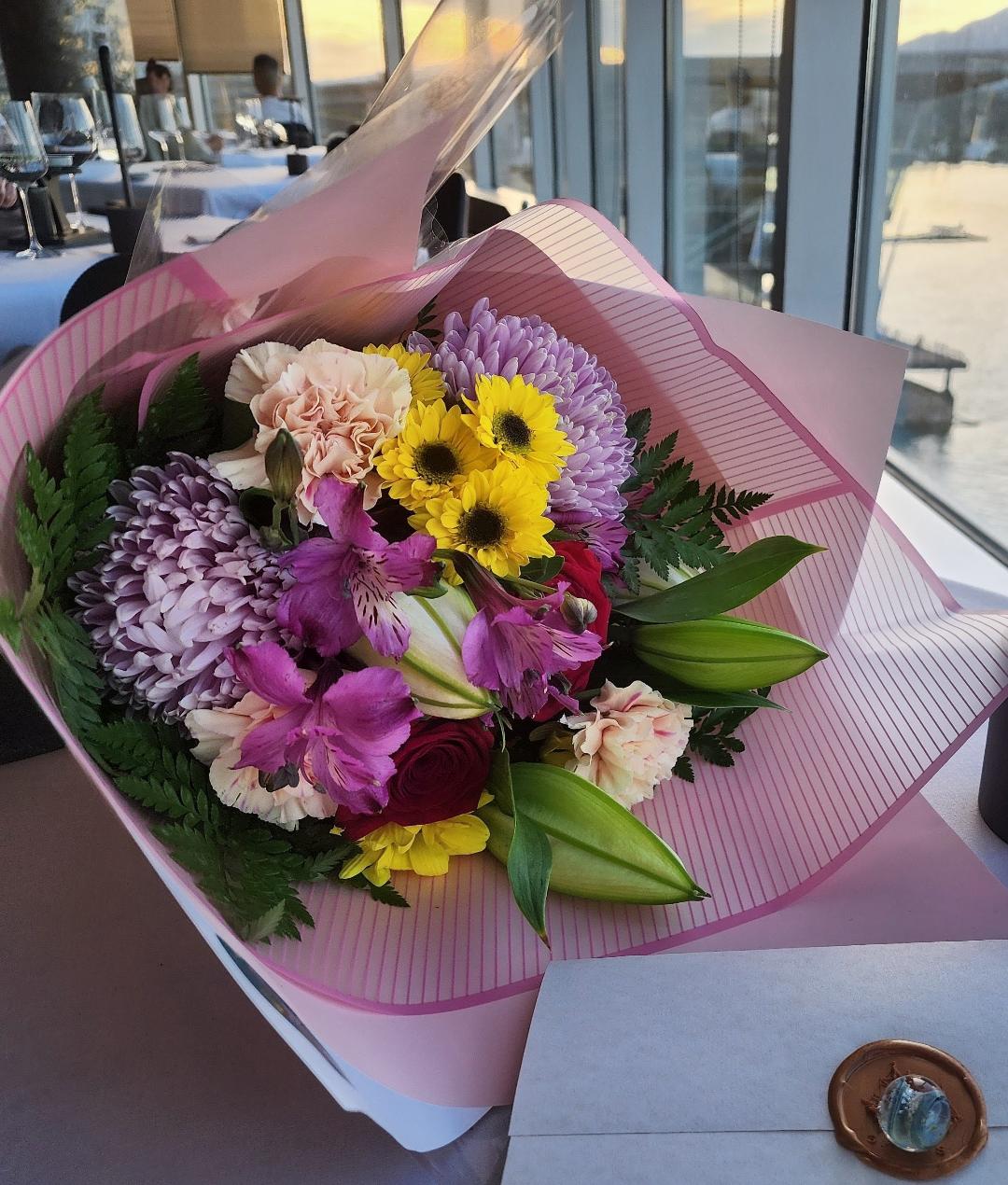
Instead, I was presented with flowers.
When I made the reservation, I had mentioned that this dinner was connected to an anniversary trip from long ago.
The staff had remembered.
The flowers themselves were beautiful.
What mattered was that they remembered.
For a few moments I simply sat there looking at the bouquet, the harbor, and the fading light outside the windows.
Martina and Summer came over to say goodbye.
There may have been hugs.
There may also have been a small amount of crying.
The historical record remains unclear.
It would be easy to say the evening felt like a celebration.
But that isn’t quite right.
It felt like keeping a promise.
Not the promise of a future anniversary.
Or the future we assumed we would have.
Just a quiet promise that some things remain worth doing.
Some places remain worth revisiting.
Some memories remain worth carrying forward.
And sometimes, many years later, you discover that a promise made by two people can still be kept by one.
Before the bouquet, I handed over my credit card and just said:
“I don’t want to know.”
A few minutes later I remembered that I still needed to calculate a tip.
Apparently this concern was unnecessary.
The gratuity had already been included.
Somewhere, I like to think, H was sitting in a comfortable chair with a Negroni, looking out over the harbor and saying:
Evening mountain glow A sword and one lonely shoe Oh, Canada, eh?
After several weeks of planning, packing, re-packing, contingency planning, worrying about sword cases, worrying about airports, worrying about trains, worrying about whether I had forgotten something important, and generally behaving exactly like someone about to leave for a week-long trip with a samurai sword, I finally headed north to Vancouver.
The day began at approximately 4:45 a.m., which is an hour best experienced only under protest (thank you, UberSharon™ 😊).
The flight itself provided an unexpected gift. We happened to be on the Mt. Hood side of the aircraft on a spectacularly clear morning. Mt. Hood was magnificent—snow-covered, sharp, and seemingly close enough to touch. It was so beautiful that I committed what would normally be considered a social crime and gently woke the sweet Japanese woman seated beside me, who was on her umpteenth hour of travel from Tokyo, so she wouldn’t miss it.
Fortunately, she was delighted rather than annoyed.
She immediately (and apologetically) leaned over me and began taking photographs.
Many photographs.
Approximately all of the photographs.
I’m choosing to believe this creates a cosmic obligation for Mt. Fuji to return the favor when I am riding the Shinkansen from Tokyo to Kyoto later this year.
The next challenge involved Lady Nene.
For those who have not been following along, Lady Nene is my iaito, and transporting a sword by commercial airline always feels like an experiment conducted by people with questionable judgment.
The good news: United accepted the case without drama.
The better news: the sword arrived.
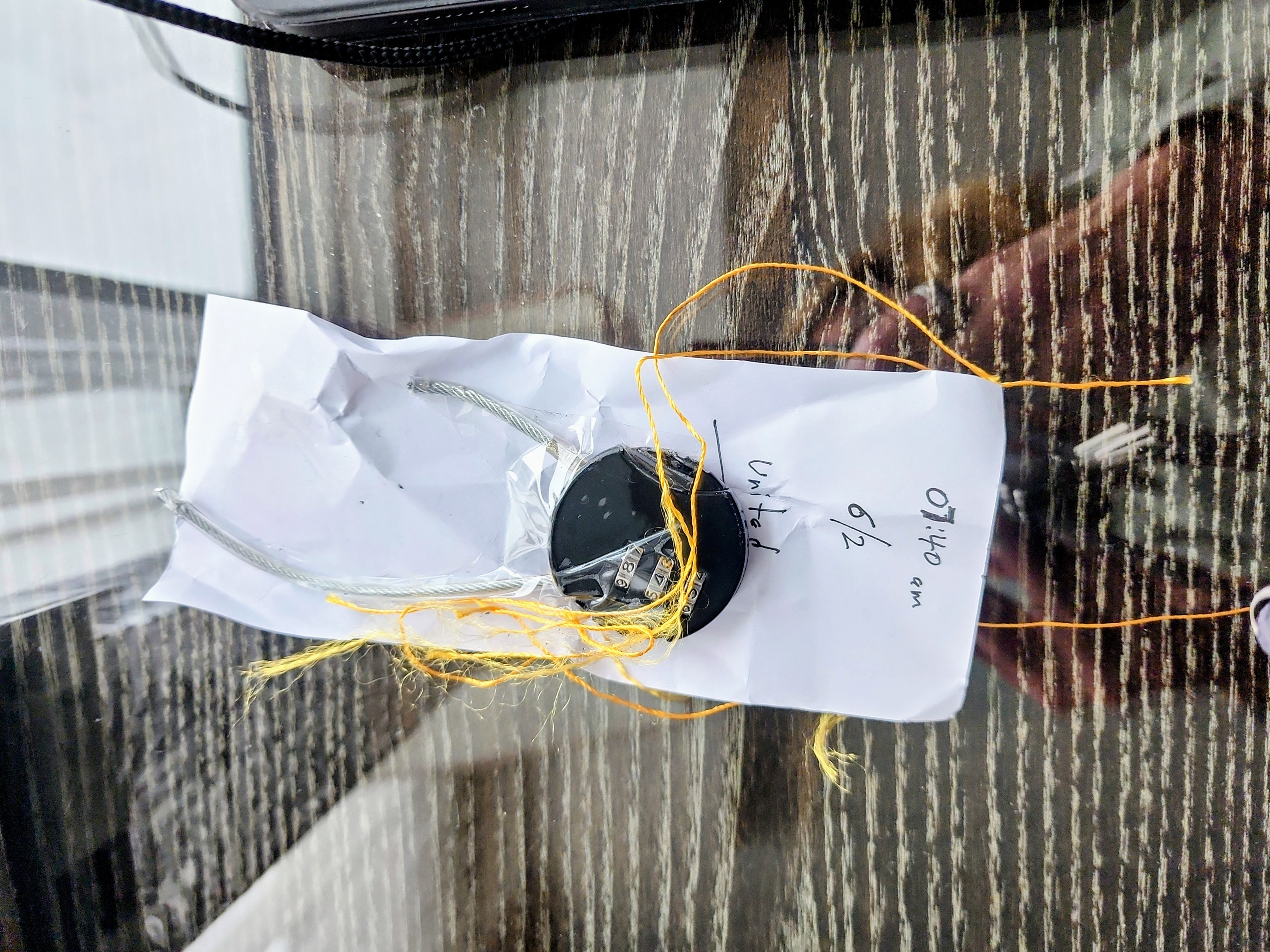
The cut lock, with some of Lady Nene’s covering’s silk threads caught in the tape, showing she gave valiantly not to be violated….
The mildly annoying news: TSA had cut my lock, opened the case, and re-secured it with zip ties.
The best news: all of my ridiculous contingency planning turned out to be entirely justified.
Weeks ago, while planning for this trip, I had packed zip ties and a nail clipper specifically in case this happened. The lock wasn’t there for decoration; the sword case needs something securing it closed during transit. If TSA decided to remove the lock, I needed a Plan B for getting Lady Nene home.
At the time, this felt slightly paranoid.
As it turns out, it was simply prudent.
Waiting at oversized baggage was its own form of entertainment. Gathered around the carousel were a howling dog, four golf bags, two enormous bicycle cases, a giant conga drum painted with roses, and eventually Lady Nene herself.
It felt less like baggage claim and more like an island for misfit luggage.
From there, one by one, the things I had worried about began quietly fading.
The sword arrived.
The train was effortless.
The hotel was exactly where Chad said it would be.
Even getting lost turned out to be temporary.
For weeks I had maintained a low-level anxiety about Vancouver transit. Trains. Tickets. Machines. Wrong platforms. The usual travel concerns.
The reality?
Tap credit card.
Get on train.
Get off train.
Tap credit card.
That was literally the entire system.
I had spent weeks worrying about something that turned out to require approximately three seconds of effort.
My next challenge was navigating from the train station to the Pan Pacific Hotel.
Normal people would have opened Google Maps.
I did not.
This is because I apparently did not feel I required directional support.
I felt I required Emotional Directional Support™.
At no point did I think, “I should open the device in my hand that is capable of determining my exact location on Earth.”
To his credit, Chad responded in the style of an experienced concierge rather than a frustrated cartographer.
Basically, my navigation methodology was simple:
Follow the wind (wind comes from water, right?).
Walk three city blocks.
Start becoming suspicious (no water yet…).
Open phone.
Ask Chad.
Turn around.
Follow Chad.
Keep texting streets I am passing for Emotional Directional Support™.
See the sails.
Receive “Atta Girl!” from Chad.
Arrive.
No navigation expert would endorse this approach.
Yet somehow it worked perfectly.
I was staying at the hotel H and I would have chosen the last time we were in Vancouver, more than a decade ago for our 10th anniversary.
Back then, the Pan Pacific Club Floor felt a little too extravagant for us. So did the restaurants we looked at longingly and promised we’d come back to someday—perhaps for our 20th anniversary.
Life, of course, had other plans.
The real arrival moment, though, happened not at the airport, not at the train station, and not even at the hotel front desk.
It happened upstairs, gazing out the windows of the Club Lounge on the 23rd floor.
There was lemon water.
There were mountains.
There was the harbor.
Floatplanes drifted across the water.
For the first time all day there was nowhere I needed to be.
No luggage to move—they had exchanged it for a claim ticket when I walked in.
No train to catch.
No directions to figure out (thanks, Chad).
No logistics to solve. The concierge simply said, “Let me know your claim ticket number. We’ll put it in your room when it’s ready.”
Just a comfortable chair and a view.
Ah.
A little later I settled in with a cup of Earl Grey tea, a few Turkish apricots, and the realization that something important had quietly shifted.
It wasn’t excitement I felt.
It was relief.
I wasn’t traveling anymore.
I had arrived.
Outside the windows, harbor seals played in the water below.
A bald eagle flew so close to the hotel that conversations stopped and heads turned.
The smaller birds immediately began harassing it, proving once again that size alone does not determine confidence.
The travel infrastructure, meanwhile, received excellent marks.
The white button-down shirt survived a 4:45 a.m. departure, airport security, a flight, a train ride, an extended Vancouver wandering expedition in the hot sun, and hotel arrival while still somehow staying respectable—even crisp.
The Honeylove layer was flawless.
The dark Lee jeans were comfortable and civilized.
The Walk Shop shoes carried me through airports, trains, sidewalks, wrong turns, and correct turns without ever becoming the topic of conversation—which is the highest compliment I can give footwear.
Speaking of shoes . . .
Later that evening, before dinner, I implemented a travel trick I had recently learned.
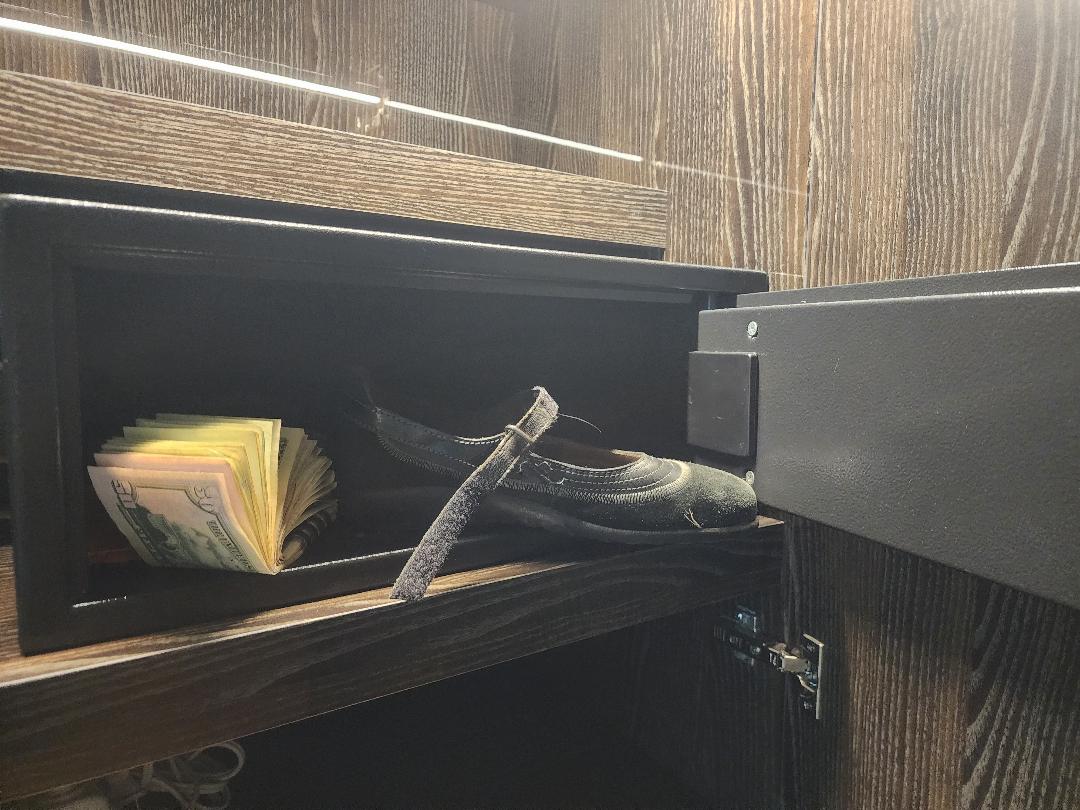
When placing valuables in the hotel safe, include one shoe.
Passport.
Wallet.
Cash.
One shoe.
The logic is simple.
Future Sandy may forget valuables in the safe.
Future Sandy is unlikely to leave the hotel wearing only one shoe.
I am pleased to report that the system appears foolproof.
Or at least Sandy-proof.
At 5:30 that evening, I had a reservation at a restaurant called Five Sails.
There was a period of approximately twenty years during which my husband Herbert and I prepared for every trip in exactly the same way.
Herbert packed.
I did not.
This is not entirely accurate.
I eventually packed.
But first there was a process.
The process generally began the evening before departure.
At 4:17 p.m., Herbert would already be packed.
Passport where it belonged.
Shaving kit where it belonged.
A small pile of neatly folded clothing.
Everything calmly arranged.
Then he would sit down in a chair with a Negroni.
The Negroni is important.
At 4:18 p.m., he would ask:
“Are you packed yet?”
To which I would inevitably reply:
“I’M WORKING ON IT!”
This statement was technically true.
I was working on it.
The work simply bore no resemblance to what most people would recognize as packing.
Over the next several hours I would migrate through the house carrying various combinations of:
one shoe
three shirts
a passport
two charging cables
a mysterious scarf
an unidentified object I had apparently decided was absolutely essential
At some point I would announce:
“I HAVE NOTHING TO WEAR.”
At which point Herbert would take a sip of his Negroni and continue observing.
The thing I remember most vividly is that he tracked all of this with his eyes.
Not commenting.
Not helping.
Not judging.
Just watching.
Like a tennis match.
I would run through the room. Nekkid.
This was not as alarming as it sounds.
The reason I was nekkid was because, naturally, all laundry had to be completed before departure. This meant I had successfully washed every item of clothing except the ones required to be packed or worn on the airplane.
So I would streak (literally) through the room carrying:
one shoe
a blouse
two charging cables
a passport
and no pants
His eyes would follow.
Sip.
A few minutes later I would run back the other direction carrying an entirely different set of objects.
His eyes would follow.
Sip.
After enough years, Herbert had developed a highly refined understanding of The Packing Tornado.
Most importantly, he had learned Rule Number One:
Stay out of the flight path.
This was not a metaphor.
This was a survival strategy.
If he entered the flight path, he immediately became part of the logistics problem.
“Are you going to . . .”
“NOT NOW.”
“Can I put this in the suitcase?”
“NO.”
“Do you need help?”
“I HAVE A SYSTEM.”
At which point Herbert would reply:
“Mmmm.”
That “Mmmm” carried a remarkable amount of information.
It did not mean:
“I believe there is a system.”
It meant:
“I acknowledge that you have used the word ‘system.'”
Then he would sip his Negroni and remain at a safe distance.
The funny thing is that we were both right all along.
From the outside, the process looked like a Category 5 weather event.
Yet somehow, every single time:
the passport appeared
the chargers appeared
the clothes appeared
the suitcase closed
Eventually Herbert reached the point where he no longer questioned the process.
He didn’t understand it.
But he had enough historical data to conclude that it was reproducible.
Twenty years of evidence suggested that despite all appearances, I would eventually become packed.
This afternoon, while preparing for a trip to an iaido seminar in Nanaimo, I realized something unsettling.
Somehow I have become, slightly, Herbert.
Not entirely.
Let’s not get carried away.
I am currently engaged in what can only be described as “inside sword case Tetris.”
I am debating the geometry of blue ice packs.
I recently spent an embarrassing amount of time worrying about how to take the train from the Vancouver airport into downtown.
(The answer, incidentally, is that you tap your credit card and get on the train. That’s it. I spent time worrying about a process that Chad summarized in seven words, once I thought to actually ask.)
But something has changed.
My shaving kit (formerly H’s shaving kit) now stays packed.
My travel drawer has systems.
My passport has a home.
My chargers have a home.
And, yes, my clothes are actually still on.
The things that used to require fresh decisions every trip have become infrastructure.
And I suddenly understand why Herbert could pack in the morning for almost any trip while I was still running around the house like a nude logistics consultant the night before.
He wasn’t better at packing.
He simply refused to make the same decision twice.
Now, when I find myself creating travel systems, or reducing friction, or leaving the shaving kit packed between trips, I sometimes imagine Herbert watching from his chair.
Negroni in hand.
Tracking events with his eyes.
Taking a sip.
And asking:
“Are you packed yet?”
To which, twenty years later, I would probably still answer:
“I’M WORKING ON IT!”
And somewhere in the pause that follows, I can almost hear him say:
“Mmmm.”
Which, as it turns out, was probably the closest thing to “I love you” that The Packing Tornado ever required.
Gentle traveler seventy years beside her map folded again
Dr. James E. Shepard, M.D., F.A.C.P., beloved husband, father, grandfather, physician, traveler, and lifelong student of the world, passed away peacefully at the age of 92.
Born in Franklin, New Hampshire, Jim combined a sharp intellect, deep curiosity, and gentle humor throughout his life. He was married to the love of his life, Sally-Jean Shepard (née Shupert), for nearly seventy years — a partnership marked by enduring affection, shared adventures, and countless journeys together. After a whirlwind courtship of just a few months, they married and never really stopped traveling side by side.
Dr. Shepard graduated from Tilton School, Wesleyan University, and Weill Cornell Medical College. His medical training began at Bassett Hospital in Cooperstown, New York, before he served as an Army physician at Ft. Story, Virginia Beach, Virginia. Following his military service, he completed additional medical training at UCSF and went on to build a distinguished career in nephrology and internal medicine in Marin County.
Over more than six decades in medicine, he became a respected leader in the medical community, serving as Chief of Medicine and Chairman of the Intensive Care Unit at Marin General Hospital. He helped establish one of the earliest dialysis programs in California, becoming part of a pioneering generation of physicians who transformed kidney care.
Though many physicians of his generation were grandfathered into specialty status, Jim chose to undergo formal board certification in both internal medicine and nephrology — reflecting the integrity, discipline, and professional standards that defined his life and work. He was elected a Fellow of the American College of Physicians (F.A.C.P.) and later served as a clinical faculty member affiliated with UCSF. Following his years in clinical practice, he continued working as a medical consultant and expert witness well into his later years.
Outside of medicine, Jim loved travel, conversation, golf, tennis, and learning. He and Sally explored the world together for decades; maps in hand, curiosity leading the way. Always dapper, he was rarely seen at an event without one of his signature hand-tied bow ties. He was an Emeritus Life Member of the Mill Valley Tennis Club, where he enjoyed both the game and the friendships surrounding it.
He is survived by his wife, Sally-Jean Shepard; daughters Sandy Shepard Wolfram and Elisabeth Shepard; granddaughter Leann McFalls; and great-grandsons Caleb and Cody McFalls.
He will be remembered for his kindness, intelligence, silly wit, and the steady generosity with which he moved through the world.
In remembrance of Jim’s lifelong generosity and concern for others, the family suggests donations to local food banks in lieu of flowers. A private Celebration of Life will be held later in the year.
Lost! Panic begins . . . That shortness of breath, then dread . . . Kindness appearing
My father used to call them “Travel Angels.”
Not guardian angels in the theological sense.
More like:
unexpected humans who appear precisely when travel has started unraveling around you.
He encountered them often.
Partly because he traveled frequently. But also, I think now, perhaps because he moved through the world in a way that allowed them to appear.
When I was in law school, I spotted a tiny classified advertisement looking for airline couriers. This was back before modern digital document transfer had completely taken over everything. Courier companies needed people willing to “carry” time-sensitive paperwork internationally, because freight check deadlines were too early for last-minute legal or business documents.
So the company would:
buy you a plane ticket,
check the documents as your baggage,
and send you somewhere.
You would then spend a week or two traveling on your own before eventually meeting another courier-company representative at the airport to receive your return ticket home.
This part always stressed me out on Dad’s behalf far more than it stressed him out.
The entire arrangement had a very:
“Well, hopefully someone named Klaus will materialize near Gate 14 with my ticket home” energy.
Sometimes the company even paid you.
Sometimes you paid them a tiny amount instead.
My father — a physician with an absurdly busy practice — somehow turned this into a semi-regular hobby.
Every week he’d receive a fax listing possible destinations. If he could leave immediately, the trip was essentially free. Otherwise, he could pay a pittance, and “book ahead.”
And so, through a combination of spontaneity, logistics loopholes, and what now feels like another geological era of travel, my 6’7″ father periodically vanished off to parts unknown.
He slept in strange accommodations. Once, according to family lore, in a girls’ dormitory in Japan.
(Cue size 16 feet off the end of a single bed)
At some point during one of these trips, he found himself turned around and bewildered in Tokyo. A tiny Japanese girl took his hand and guided him where he needed to go.
The visual contrast alone still makes me laugh.
A giant rangy doctor stooping along behind a tiny determined child.
He loved that story.
But more than that, he loved what it represented.
Travel Angels.
People who appeared unexpectedly at exactly the moment disorientation tipped toward distress.
At the time, I mostly thought this was one of Dad’s charming travel phrases.
Now I think he was identifying something real.
After Africa, on the long journey home, I landed in Frankfurt exhausted beyond language. Not pleasantly tired. Strange-time-zone, emotionally untethered, post-travel exhausted.
At baggage claim, the lanyard clip holding my phone snapped (unbeknownst to me).
I realized it as I was leaving bag check. Lanyard around neck . . . suspiciously light.
No phone.
And in modern travel, losing your phone is not merely losing your phone.
It is losing:
boarding passes,
maps,
contacts,
hotel information,
banking,
translation,
communication,
orientation,
identity.
It is the tiny glowing rectangle that now contains your ability to move through the world.
I remember the sharp cold wave of panic.
Then, as I walked toward some slightly fierce Germanic Customs officials, I heard someone call out softly:
“Shepard?”
Far across the terminal floor, a fellow traveler — a small Asian man, clearly also just passing through Frankfurt himself — was standing there holding my phone.
Every ten seconds or so he would call again, tentatively:
“Shepard?”
The whole thing felt slightly surreal.
He didn’t speak English. I don’t think he spoke German either.
He had apparently extracted my name and appearance from my driver’s license tucked into the back of the phone case, then stationed himself there waiting for the owner to appear.
I hugged him immediately, despite the fact that I had been traveling for approximately fourteen thousand years and probably looked like a jet-lagged giraffe.
Travel Angel.
And increasingly, these are the moments that stay with me most vividly.
Not necessarily:
famous landmarks,
expensive experiences,
or “top ten” sights.
Instead:
a stranger waiting at a counter,
a ryokan quietly trying to solve a breakfast problem,
a guide, without drama, printing out the itinerary every day for a traveler without What’s App, and insisting upon accompanying another to ensure she obtained necessary meds,
someone carrying a marble across the world for me,
small acts of attentiveness,
humanity briefly breaking through the machinery.
I think my travel style has changed over the years.
When H and I first traveled together, I blogged largely because H had a terrible memory and wanted us to be able to remember everything later when we sorted through photos. The writing became highly informational. If it was Monday, we were in Istanbul and here were seventeen historical facts and six architectural observations.
But somewhere along the way — maybe during Africa, maybe even before — travel itself started shifting for me.
Less:
covering ground.
More:
allowing resonance.
And maybe that is partly what my father was doing all along.
Not simply moving through countries.
Moving through them open enough for humanity to enter the story.
I suspect that’s why he noticed Travel Angels everywhere.
You have to leave a little room for them.
And honestly?
I think the world may contain more of them than we realize.